
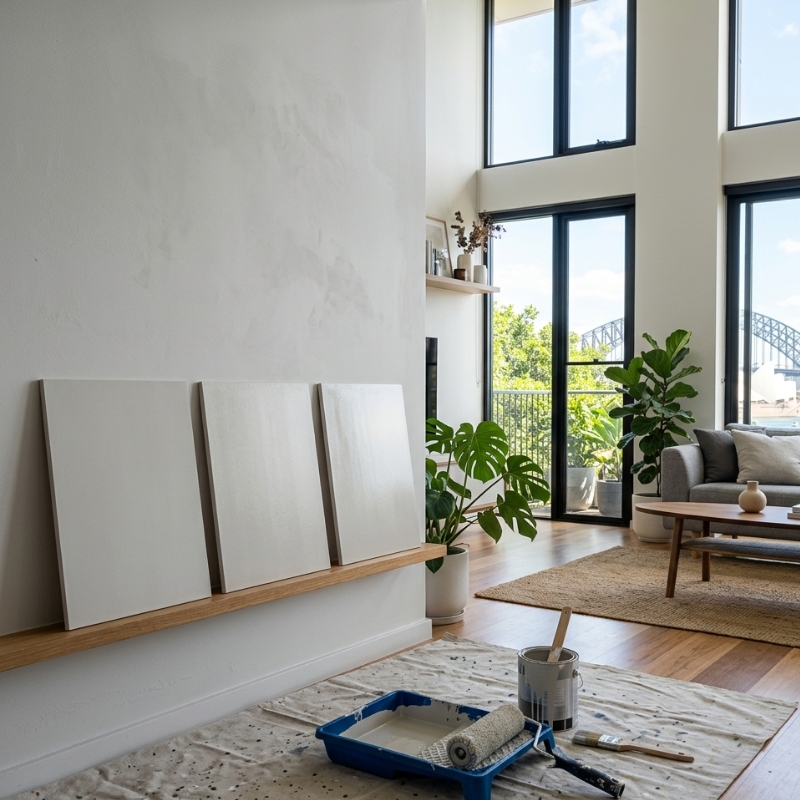
Sydney homes have a few quirks that make paint finishes matter more than most people expect. We get big, bright days that can turn a slightly shiny wall into a glare bomb. We’ve also got plenty of open-plan layouts where one wrong finish choice can look “different” the moment you step back and see multiple rooms at once. Add in coastal humidity (especially if you’re anywhere near the beaches), winter condensation in older homes, and the day-to-day wear of busy households — and suddenly the finish you choose becomes just as important as the colour.
If you’ve ever painted a room and thought, “Why does this look weird in the afternoon?” or “Why can’t I touch up that mark without seeing it forever?” — you’re not alone. Often, the problem isn’t the colour. It’s the sheen level.
This guide will help you choose the right paint finish for each room, with Sydney living in mind: light, moisture, traffic, and how the room actually gets used.
Paint finishes explained (without the jargon)
Paint finish is simply how much shine the paint has once it dries.
In Australian interiors, you’ll commonly see:
• Matte / Flat: almost no shine, soft look, hides wall imperfections well, can be less washable (though premium washable mattes exist)
• Low sheen: a soft glow, more washable than matte, still forgiving on older or imperfect walls
• Satin: noticeably more sheen than low sheen, tougher, easier to wipe, can start showing patches and roller texture
• Semi-gloss: clearly shiny, very durable, best for trims, doors, and high-touch surfaces
• Gloss / high gloss: very shiny and reflective, shows every defect, usually for feature joinery or specific design effects
A simple way to pick the right finish (Sydney edition)
Before you decide, rate the room on four factors:
• Traffic: how often people brush past walls (hallways, stairs, kids’ rooms)
• Moisture: steam/condensation risk (bathrooms, laundries, some kitchens)
• Light: big windows, skylights, downlights, north-facing glare
• Wall condition: dents, ripples, patched areas, older plaster, visible joins
Then balance the trade-off:
• Higher traffic/moisture = more durable finish
• More light/rough walls = lower sheen to reduce glare and hide flaws
Living rooms and open-plan areas (where Sydney light can be unforgiving)
Living rooms and open-plan zones are where sheen mistakes become obvious fast. In bright Sydney homes — especially with big north-facing windows, polished floors, or lots of downlights — even a modest increase in sheen can exaggerate glare and highlight wall texture.
Best choice for most Sydney living rooms
- Low sheen on walls
Why it works
• It’s easier to wipe than many basic mattresses
• It doesn’t reflect light harshly
• It’s more forgiving on older walls than satin
When matte can be the better call
• Your walls have patches, dents, or older plaster texture you don’t want to re-skim
• You want a softer, calmer look (especially with warmer lighting)
• The room gets strong side-light (raking light) that highlights every ripple
When can satin work
• You’ve got a busy household, and you’re frequently wiping marks
• Your walls are in excellent condition (minimal patching, smooth substrate)
Just keep in mind: satin can show roller lap marks, patch repairs, and touch-up “flashing” more readily than low sheen.
Q&A: Should I use one finish across the whole open-plan space?
If your living, dining, and kitchen connect visually, using one finish across the main walls usually looks more intentional. A common Sydney approach is low sheen across open-plan living spaces for consistency, then upgrading durability only where it’s genuinely needed (like bathrooms, laundries, or trims).
If you’d like a simple, practical way to plan finishes across a whole interior, start with a consistent baseline — the same approach many homeowners pick up from Sydney painting specialists when they want open-plan spaces to look cohesive in every light.
Bedrooms (comfort first, durability second)
Bedrooms generally don’t take the same daily punishment as hallways or living areas, so you can prioritise the mood you want.
Best choice for most bedrooms
- Matte or low sheen on walls
Choose matter if
• You want a softer, more restful look
• Your walls have imperfections you’d rather not emphasise
• You’re working with strong natural light that can exaggerate texture
Choose a low sheen if
• You want better wipeability around switches, door handles, and wardrobe areas
• The room doubles as a home office or guest room and sees more activity
Kids’ bedrooms (a different story)
Kids’ rooms often behave like high-traffic zones: fingerprints, kicks, and toys bumped against walls.
Best choice
• Low sheen on walls (usually the best balance of durability and aesthetics)
Q&A: Are washable mattresses worth it?
They can be. Premium washable mattresses have improved a lot and can give you the matte look with better cleanability. But for true “wear zones” (kids’ rooms, hallways), low sheen still tends to be more forgiving long-term.
Hallways, stairwells and entry areas (high traffic, constant contact)
These are some of the most punished surfaces in Sydney homes: school bags brushing past, wet umbrellas, prams, and people squeezing around corners.
Best choice
• Low sheen on walls (most homes)
• Satin if your walls are smooth and you want more wipeability
Usually avoid
• Basic flat/matte in busy hallways (it can burnish and go shiny where it’s rubbed)
• Semi-gloss on walls unless you want a deliberately shiny look (it highlights everything)
Practical tip
Think about your “hand zone” height: doorways, corners, and around light switches. That’s where you’ll be wiping most often.
Kitchens (grease, splashes, and lots of wiping)
Kitchens aren’t just “one room.” Different walls get different abuse.
Best overall choice for kitchen walls
• Low sheen
When to consider satin
• You have a compact kitchen and wipe walls frequently
• You have a lot of activity near the splash zone
• Your walls are smooth enough that extra sheen won’t reveal texture
What about semi-gloss?
Semi-gloss is usually better on trims and doors. On walls, it can look shiny and show imperfections — so if you’re tempted, test it first under real kitchen lighting (daylight and at night).
Q&A: Can I paint behind the cooktop instead of using a splashback?
Some painted systems can work in certain areas, but directly behind a cooktop is high heat and high grease. Suitability depends on the surface, heat exposure, and product system. If in doubt, treat that zone differently and keep surrounding walls in low sheen or satin.
Bathrooms and powder rooms (moisture, steam and Sydney winter condensation)
Bathrooms are where Sydney homeowners often get surprised. Summer might feel fine, but winter condensation can quickly show you whether your paint choice and prep were up to scratch — especially in older homes with limited ventilation.
Best choice for most bathroom walls
• Low sheen or satin, paired with a moisture-appropriate coating system
Important point
Sheen helps with wipeability, but it doesn’t “solve” damp on its own. In bathrooms, the system matters: preparation, mould treatment if needed, the right primer, and a quality bathroom paint.
Where matte can still work
• Powder rooms with excellent ventilation and minimal steam
• Feature walls away from direct moisture (still use the right system)
Q&A: Will a higher-sheen finish stop mould?
Not by itself. Mould is usually about moisture and ventilation. A more washable finish can make it easier to clean, but preventing recurring mould often comes down to improving airflow and addressing moisture sources.
When you’re weighing up moisture, ventilation, and the right coating system (not just sheen), it helps to follow the kind of room-by-room logic trusted painters in Sydney use to match finishes to real conditions like winter condensation and daily steam.
Laundries (often the most abused room)
Laundries get moisture, cleaning products, baskets, scraping walls, and lots of “quick wipe” moments.
Best choice
• Satin for many laundries
• Low sheen if it’s well ventilated and low traffic
Sydney-specific note
If you’re near the coast (Eastern Suburbs, Northern Beaches, parts of the Shire), humidity and salty air can increase the need for good preparation and suitable products — especially on older substrates and any metal surfaces.
Ceilings (reduce glare and hide joins)
Ceilings generally look best with minimal sheen because sheen highlights joins, patch repairs, and light shadowing from downlights.
Best choice
• Flat / ceiling white
When to consider a bathroom-rated ceiling paint
• Bathrooms and other damp zones where condensation is common
Trims, doors, skirting and architraves (the “touch points”)
These surfaces take constant handling — and they’re usually where durability pays off.
Best choice in most Sydney homes
• Semi-gloss on trims and doors
Why it works
• It wipes clean easily
• It handles knocks and fingerprints better
• It gives a crisp contrast to matte or low sheen walls
If you prefer less shine
• Satin can be a good compromise, especially in modern interiors with softer styling
Feature walls and design moments (where sheen can ruin a colour)
A feature wall is often where people accidentally choose the wrong sheen because they’re chasing “richness.”
If your feature wall is darker
• A higher sheen can show scuffs and touch-ups more clearly
• Side lighting can exaggerate roller texture and patching
Usually best
• Matte or low sheen, unless you’re deliberately going for a shiny, lacquered effect
Design tip
If you want richness, focus on colour depth and lighting rather than sheen. Sheen is less forgiving than most people expect.
How to test a paint finish properly (so you don’t regret it)
A tiny sample patch isn’t enough for sheen decisions — especially in Sydney’s changing light.
Do this instead
• Paint two sample boards in the finishes you’re deciding between
• View them in morning light, afternoon glare, and at night under downlights
• Look from the side to see how much texture and patching is revealed
• Once cured, wipe them to test cleanability and mark resistance
Q&A: Why do my walls look patchy after painting?
Common causes include:
• Sheen too high for the wall condition (revealing texture and patches)
• Uneven prep (some areas sealed/primed, others not)
• Different roller nap used between coats and touch-ups
• Touch-ups done too early (paint not fully cured)
• Paint applied unevenly around the strong side light
A practical room-by-room cheat sheet for Sydney homes
A sensible default for many interiors:
• Living/dining/open-plan walls: low sheen (matte if walls are imperfect or glare is strong)
• Bedrooms: matte or low sheen (kids’ rooms usually low sheen)
• Hallways/stairs: low sheen (satin if walls are smooth and you want extra wipeability)
• Kitchens: low sheen (satin for heavy wipe zones)
• Bathrooms/laundries: low sheen or satin with a moisture-appropriate system
• Ceilings: flat ceiling white (bathroom-rated ceiling paint for damp zones)
• Trims/doors: semi-gloss (or satin for a softer look)
If you’re mapping finishes across an entire home — especially an older Sydney property with a mix of wall conditions — the planning frameworks you’ll see in residential painting in Sydney guides can help you avoid glare, uneven touch-ups, and early wear.
A note on standards and good practice
If you want a recognised benchmark for painting practice, Australia and New Zealand have guidance that is widely used across the industry. One commonly referenced resource is AS/NZS 2311:2017 Guide to the painting of buildings, which covers paint systems, application, and maintenance principles.
FAQ: Paint finish questions Sydney homeowners ask
What’s the best all-round paint finish for interior walls?
For many Sydney homes, low sheen is the best all-rounder: soft enough to look great, durable enough to clean. Matte can be ideal for bedrooms and imperfect walls. Satin can suit smooth walls where wipeability is a priority.
Does higher gloss always mean more durable?
Often, yes — but it shows more defects. A higher sheen can highlight dents, patches, and roller texture. For most interiors, semi-gloss belongs on trims and doors rather than walls.
What finish is best for bathrooms in Sydney?
Low sheen or satin, paired with the right bathroom coating system, is usually the best balance. Ventilation matters just as much, particularly during winter condensation.
What finish should I use on ceilings?
Flat/ceiling white is the standard choice to reduce glare and hide joins. In bathrooms, use a bathroom-rated ceiling paint.
Why do my touch-ups show even when it’s the same colour?
Sheen and application differences are usually the reason. Touch-ups can “flash” if the original finish was a higher sheen, the wall wasn’t uniformly primed, or you used a different roller nap.
Is matte paint a bad idea in family homes?
Not always. Matte can be great in lower-traffic areas. For hallways, kids’ rooms, and stairs, low sheen usually lasts better and cleans more easily.
Can I use semi-gloss on bedroom walls?
You can, but it’s rarely ideal unless you want a deliberately shiny look. It will highlight wall flaws and can make touch-ups more visible.