
Which Exterior Surfaces Need Which Paint in Sydney
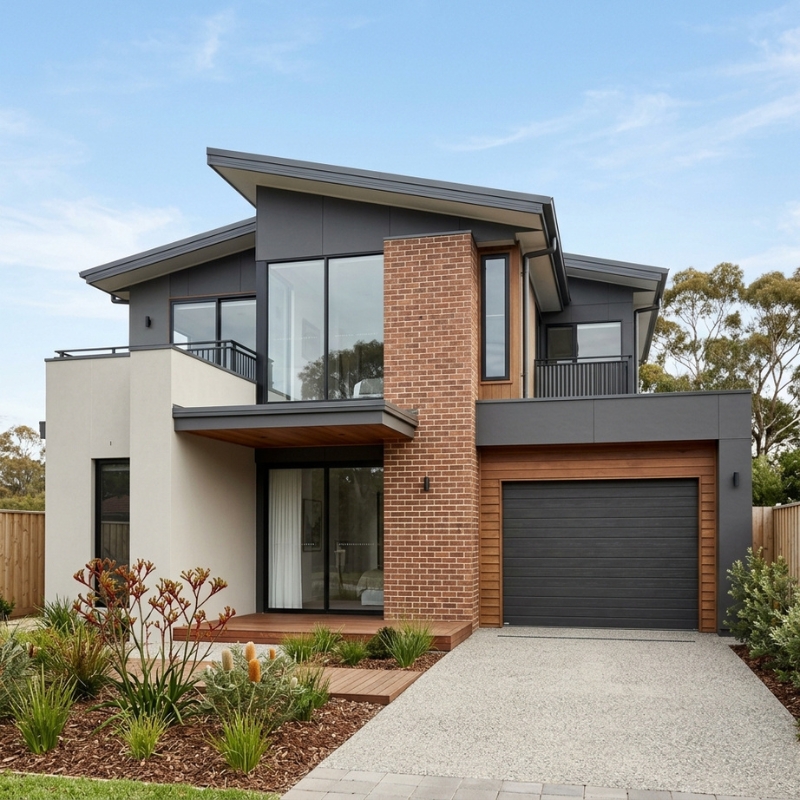
A repaint that fails early is one of the more frustrating things that can happen to a house. Two or three summers in, the render is hairline cracking, the weatherboards are flaking along the bottom edge, or the wall facing the street has gone chalky and the colour has dropped a shade.
It is rarely one thing, and it is rarely a question of effort. Exterior surfaces are not interchangeable. Render, brick, weatherboard and fibro each move, take up moisture and release it in their own way, and a coating that suits one can be working against another. Add Sydney's range of conditions and the same product behaves differently across two suburbs.
Here is what each surface needs, and why.
Render, brick, weatherboard and fibro each move, hold moisture and weather differently, so each needs a different preparation and coating. In Sydney the bigger variable is exposure: salt air on the coast and afternoon sun in the west both shorten the life of the wrong product.
Why exposure matters as much as the surface
Where a house sits does as much to a coating as what the coating is sitting on.
A house two streets from the beach and a house out west are in the same city, but the walls are being worked on by different things. Salt, moisture, UV, heat and the rate at which a surface moves between day and night all affect how long a finish holds its colour, its film and its bond.
Orientation matters within a single property too. North and west facing walls take the afternoon sun and reach the highest surface temperatures, so they show wear first. South walls stay damp longer and are where mould and lichen settle. A wall under a wide eave and the same wall left open to the weather will not age at the same rate.
So the surface tells you which product family you are in, and the exposure tells you how hard that product has to work. Both get assessed before anything is specified.
Coastal exposure
Coastal exposure means salt, constant moisture and faster chalking.
Salt carries well past the beachfront, settling on walls and drawing moisture to the surface, so chalking, the fine powder that comes off on your hand, shows up sooner than it would inland. Flashings, fixings and fasteners corrode faster, and that corrosion stains and lifts the coating around it. Thorough washing before a repaint is not optional here, because a coating going over salt is bonding to a contaminated surface.
Western Sydney exposure
Western Sydney exposure is about heat, UV and movement.
Surface temperatures on a west facing wall in summer run well above air temperature, and the surface expands and contracts through every day and night cycle. The substrate moves, the coating has to move with it, and anything brittle cracks at the joints and corners first. UV breaks down pigment and binder, so fade and loss of gloss arrive sooner on the sun struck elevations. Darker colours absorb more heat and move more, which is worth knowing before the colour is chosen.
Rendered walls
Rendered walls need a coating that lets moisture out and copes with hairline movement, over a surface that is often still alkaline.
New render stays alkaline while it cures. Coating it too early risks the alkali attacking the paint film, so new render is left for the curing period set in the manufacturer's technical data sheet, and an alkali resistant sealer goes on before the topcoats.
On existing render the preparation is the job. Walls are washed and any mould or lichen treated. Loose or drummy sections are cut out and patched. Hairline cracks are opened, filled and sanded, and anything structural goes to the right trade before a brush comes near it.
Breathability matters. Render carries moisture, and a film that seals it in can blister as that moisture tries to move. Acrylic systems made for masonry let moisture vapour out while shedding water from outside, and a flexible membrane coating suits walls where hairline cracking keeps coming back.
The finish follows the wall. A low sheen is kinder to textured render than a gloss, which picks out every imperfection across a large elevation.
Face brick and painted brick
Painting face brick is effectively a one-way decision, so the thinking matters more than the product.
Once brick is coated, getting back to bare face brick means stripping the whole elevation, which is slow and can damage the brick face and the mortar. Repainting from then on is straightforward, but reversal is not realistic for most homes. Make the call knowing that.
If you are going ahead, preparation decides it. The wall is washed and any organic growth treated. Mortar is checked and repointed where it has gone back, because paint will not bridge a failing joint. Efflorescence, the white salt bloom that appears on brickwork, is brushed off dry and its source dealt with, since those salts are coming out of the wall with moisture and will keep coming until the moisture stops.
A masonry sealer goes on first, then masonry acrylic topcoats, and the wall has to be dry through rather than dry on the face.
Brick that is already painted is a simpler job: wash, treat growth, scrape and sand back anything loose, spot prime the bare areas and recoat.
Weatherboard and timber
Timber moves, so a coating on weatherboard has to move with it while sealing every face that can take up water.
Boards swell and shrink with moisture and temperature, which is why the failures show at the joints, the ends and the bottom edges. Preparation starts with washing, then scraping and sanding all loose material back to a sound edge, feathered so the repair does not telegraph through the finish.
Bare timber is primed before anything else. An oil based or purpose made timber primer seals the grain and gives the topcoats something to hold, and knots are sealed so resin does not bleed through later.
End grain is the detail most often missed. Cut ends, board ends and undersides draw moisture in far faster than the face does, and a board coated on the face and left raw on the end will fail from the end back. Every cut end gets primed.
Gaps and joints are caulked with a flexible exterior sealant after priming, not before, then two topcoats go on with the recoat times from the data sheet respected.
Fibro and cement sheet
Fibro and cement sheet can be painted, but the age of the sheeting decides what happens before a brush goes near it.
Cement sheeting made in Australia before the late 1980s may contain asbestos. If your sheeting is from that era, or you do not know when it was installed, it must be assessed by a licensed professional before any sanding, cutting, scraping or water blasting. Do not test it, disturb it or prepare it yourself. That assessment comes first, every time.
Modern fibre cement is straightforward. It is porous, so it is sealed before the topcoats, and joints, tapes and fixings are checked and made good. Nails or screws that have corroded will stain through a new coating, so they are dealt with first.
Older painted fibro in sound condition is washed, treated for mould, cleaned by hand rather than abraded, then sealed and recoated with a masonry acrylic. Where the surface is chalky or breaking down, that is exactly the point to get the assessment done rather than start sanding.
Eaves, soffits, fascias and gutters
Eaves, soffits, fascias and gutters fail first because they are skipped most often.
They are awkward to reach, they sit above eye level, and they are the easiest thing to leave off a job. They are also doing the hardest work. Fascias take direct sun and rain. Eaves and soffits sit in shade and still air, which is where mould settles. Gutters hold water and leaf litter against the metal.
Each wants its own treatment. Soffit linings are washed, treated for mould and coated with an exterior acrylic. Timber fascias are sanded, primed on the bare areas and finished with an exterior enamel or acrylic. Metal fascias and gutters need the right primer for the substrate and for any corrosion present.
This is also the point to look up. If the roof is in the conversation as well, roof painting is handled as its own system rather than as an extension of the wall work.
How to tell your exterior is due
Your exterior tells you when it is due, and the signs are all visible from the ground.
- Chalking: a fine powder comes off on your hand when you run it down the wall
- Flaking or peeling, usually starting at edges, joints and board ends
- Hairline cracking across render, or cracking that opens at corners and junctions
- Colour noticeably faded on the north and west walls compared with the south
- Bare substrate showing through, whether that is render, timber or metal
- Timber that has swollen, cupped or gone soft at the ends
- Mould or green growth that comes back quickly after washing
One of these on a single wall is a repair. Several across an elevation means the coating has done its work. For more on what drives that timing, see how long exterior paint lasts in Sydney.
There is no one product that suits every surface on a house. Render wants breathability and alkali resistance. Brick wants a decision made with open eyes and a sealer under it. Timber wants flexibility and primed end grain. Fibre cement wants an assessment before anything else. Exposure then sets how hard that system has to work, with salt and corrosion driving the coastal jobs and movement and UV driving the western ones.
Get the surface and the exposure right and the preparation follows from there. If you want your exterior assessed surface by surface, our exterior painting in Sydney service page explains what we check and how we prepare.
Frequently asked questions
How often should a Sydney house be repainted outside?
Go by condition rather than a number of years. Chalking that comes off on your hand, flaking at edges and board ends, hairline cracking in render and noticeably faded colour all say the coating is done. Coastal walls and western facing elevations reach that point sooner than sheltered ones.
Can you paint over face brick?
Yes, but treat it as permanent. Getting back to bare brick means stripping the whole elevation, which can damage the brick and the mortar. Before committing, repoint any failing joints, deal with the source of any efflorescence, and be sure about the colour, because changing your mind later means repainting rather than reversing.
Get a free quote
For a fixed-price quote, call Sydney Paintmasters on 0423 019 087 or request your free quote online.