
What to Do Before the Painters Arrive
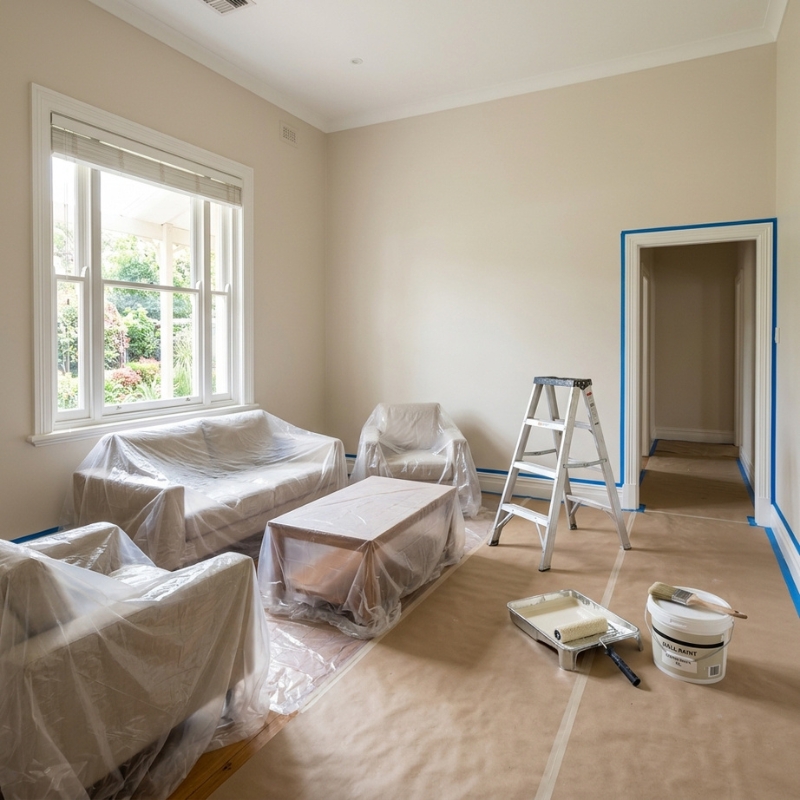
Before painters arrive, clear furniture away from the walls, take down anything hanging, move valuables and breakables out of the rooms being painted, make sure there is parking and power access, and agree where the team can set up and wash tools.
A repaint runs faster and finishes better when the house is ready for it. Every hour the team spends shifting a wardrobe or hunting for a working power point is an hour not spent cutting in, and furniture still against the wall on the first morning has to be moved twice. None of the preparation is difficult. Most of it is simply knowing what your painter handles and what sits with you. This guide covers the week before, the day before room by room, and the small things that hold up a start, then finishes with a checklist you can work through. Follow it in order and the first day starts with painting, not packing.
The week before
The week before is for the decisions and arrangements that cannot be made on the morning: final colours, parking, access and what happens with pets.
Confirm your colours in writing with your painter, including the sheen for each room and where one colour stops and the next begins. Changing a colour once the first coat is on means more product and more labour.
Sort out parking. If you are on a street with permit or time limited parking, ask your council about a temporary permit, or work out which nearby space the team can hold all day. A crew that has to shift a vehicle every two hours loses that time off the job.
Decide how the team gets in. If you will be at work, arrange a key, a lockbox or a neighbour, and confirm which rooms are in scope and which are off limits.
Book any other trade first. If a cornice is cracked, a sill has rotted or a window needs reglazing, that work goes ahead of the paint rather than after it.
Pets and small children
Pets and small children are easiest to manage by keeping them out of the rooms being worked on. Arrange day care, a friend's place or a room at the other end of the house, and tell your painter if a cat or dog is home so doors and gates stay shut. Keep finished rooms closed while they dry and ventilate them before everyone moves back in.
The day before, room by room
The day before, work through the house one room at a time and move anything you want kept clear of the work. Whatever is left behind gets shifted to the middle of the room and covered, so the less there is, the better.
- Living areas. Move lounges, side tables and rugs out if there is somewhere for them to go, or into the centre of the room if there is not. Take down artwork, mirrors and photo frames. Disconnect the television and any wall mounted speakers, and pack away remotes, consoles and cables.
- Bedrooms. Strip the beds and pull them away from the walls. Clear the top of every wardrobe and tallboy. Take down curtains and blinds where the wall or architrave behind them is being coated, and bag the brackets with their screws so nothing goes missing.
- Kitchens and wet areas. Clear the benches and the tops of the cupboards, and move the kettle, toaster and anything else that lives out. Take towels, bath mats and toiletries out of the bathrooms and clear the top of the laundry.
- Hallways and stairs. Leave these completely empty. They are the route everything travels, so shoes, baskets, hall tables and anything stored on the stairs need another home for the week.
Move valuables, breakables and electronics right out of the rooms being worked on rather than into the middle of them. Jewellery, glassware, instruments and anything with sentimental value are better in a room that is not in scope.
Floor coverings stay where they are. Loose rugs are best rolled and stored, but protecting carpet, timber and tiles is part of any interior painting job, so there is no need to lift or cover them yourself.
What to take off the walls
Anything fixed to a wall should come off before the team starts, and most of it is quicker for you to remove than for a painter to work around.
Take down picture hooks, mirrors, floating shelves, wall clocks and anything sitting on a bracket. Pull out nails and wall plugs wherever you do not want that fixing back in the same spot, because filling and sanding happen before the first coat, not after it. Bag the hardware for each item and label the bag with the room it came from.
Curtain rods and blind brackets come off where the wall or architrave behind them is being coated. If you want them back in the same holes, mark the positions before you unscrew anything.
Switch plates, power point covers, vents and door hardware are usually your painter's job. They come off, the surface is cut in behind them, and they go back on at the end. Check which of these your painter removes so nothing is taken off twice.
Access, parking and power
Access, parking and power are the three things most likely to hold up a start, and all three are settled in a phone call the week before.
Access means the team can get in at the agreed time without waiting. A key, a lockbox code or an agreed arrival time all work. In a unit or a gated complex, arrange building access and let the building manager know the work is happening.
Parking matters because the vehicle carries the ladders, the drop sheets and the paint. If the van has to sit several streets away, every trip back to it comes out of the working day. A driveway, a reserved space out the front or a council permit all solve it.
Power runs the sanders, the lights and sometimes a sprayer. Confirm which points work, particularly outside and in any room that has been renovated. If the power is off at the board or a circuit has a fault, say so before the day rather than on it.
What your painter should bring and do
Protecting and preparing the work area is your painter's responsibility, not yours. A professional crew turns up with everything needed to cover the house and leaves it clean.
That covers drop sheets over floors and over any furniture left in the room, masking of skirting boards, architraves, cornices, windows and anything meeting a painted surface, and plastic over fixed items such as benchtops, vanities and built in joinery. It covers removing and refitting switch plates and hardware, filling and sanding holes and cracks, and spot priming bare or patched areas before the first coat, in line with AS/NZS 2311 and the technical data sheet for the product being used.
It also covers the clean up. Masking comes off, sheets are lifted, and offcuts and empty tins leave with the team. If anything is unclear about who is doing what, ask before the first day rather than on it.
A printable checklist
Here is the whole job in one place. Work down it and the house will be ready.
Two weeks out
- Confirm colours and sheen levels in writing
- Book any repairs that need to happen before the paint goes on
The week before
- Arrange parking, or a council permit if the street needs one
- Agree access: key, lockbox code or arrival time
- Sort out pets and children for the days involved
- Confirm which rooms are in scope and which are not
The day before
- Clear furniture away from the walls, or out of the room
- Take down artwork, mirrors, shelves and wall mounted screens
- Remove curtains, blinds and brackets where the wall behind is being coated
- Strip the beds and clear the tops of wardrobes
- Clear benches, bathrooms and the laundry
- Empty hallways and stairs
- Roll and store loose rugs
- Move valuables, breakables and electronics into a room that is not being painted
- Bag and label everything you have unscrewed
On the morning
- Unlock, or hand over the key
- Point out the power points and the tap the team can use
- Confirm where they can set up and wash tools
- Make sure pets are secured away from the work area
None of this takes long, and it changes how the whole job runs. A house that is cleared, accessible and sorted on parking and power lets the team start cutting in on the first morning instead of moving your furniture. You get a cleaner finish, fewer interruptions and a crew that is out of your way sooner.
Work down the checklist above in the week before your start date and tick off the last few items the night before. If you are still choosing a painter, our house painting in Sydney service page explains what the work covers and what preparation we include.
Frequently asked questions
Do painters move furniture?
Painters will usually move whatever furniture is still in the room into the centre and cover it with drop sheets. What they ask you to handle is anything valuable, breakable or electronic, along with artwork and personal items. Confirm the split with your painter before the day so nothing is left to chance.
Do I need to be home while the house is painted?
You do not need to be home, provided the team has reliable access. Most owners hand over a key or a lockbox code and check in at the end of each day. If you are living in the house through the work, agree which rooms are handed back to you and when.
Get a free quote
For a fixed-price quote, call Sydney Paintmasters on 0423 019 087 or request your free quote online.