
How Much Does Commercial Painting Cost in Sydney?
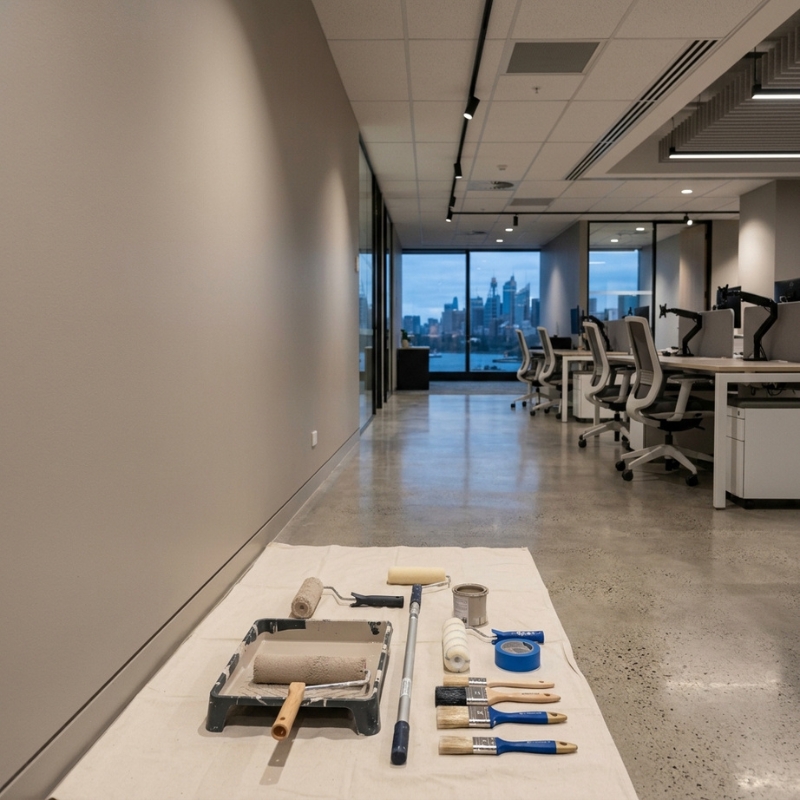
If you manage a business, an office or a strata building, a repaint is more than a cosmetic decision: it's a budget line you need to defend and a project that has to happen without disrupting your operations. This guide from Sydney Paintmasters, experienced commercial painters in Sydney, breaks down what commercial painting costs and what drives the price, so you can plan a realistic budget. Just as importantly, it explains why minimising downtime is part of the value, not just the headline rate, because for a working site the cost of disruption can matter as much as the cost of the paint.
Commercial painting in Sydney is usually priced per square metre or per project, and typically runs lower per m2 than residential on large open areas but higher where access, height, after-hours work or specialist coatings are involved. The main cost drivers are area, surface prep, coating type and scheduling around your operating hours.
What drives commercial painting costs?
Commercial painting is priced on a different basis to a home repaint, and several factors shape the final figure. Area and square metres come first, since larger sites take more paint and labour, though big open walls can be more efficient to cover per square metre than fiddly detailed spaces. Surface type and condition matter, as concrete, render, plasterboard and metal each behave differently, and surfaces that need significant repair or preparation cost more. Preparation is as important commercially as it is residentially, because it determines how well and how long the finish holds up in a high-use environment. Coating specification is a big one: commercial jobs often call for specific performance coatings, such as durable, washable, low-odour, anti-graffiti or anti-microbial products, and these affect the price. Access and height add cost where scaffolding, elevated work platforms or traffic management are needed. And scheduling is a genuine cost driver, because work done after hours, on weekends or in staged shifts to keep your business running is planned around your operations rather than the painter's convenience. Understanding these factors helps you see why a commercial quote is built the way it is, and why the lowest headline rate isn't always the best value once disruption is factored in.
Cost by property type
Different commercial properties have different demands, which is why the cost profile changes from one to the next. Rather than a single rate, it helps to see what shifts between them:
| Property type | What drives the cost | Typical positioning |
|---|---|---|
| Offices | Detail work, partitions and after-hours to avoid downtime | Mid, higher with lots of cutting-in or after-hours work |
| Retail and fit-outs | Feature finishes, tight deadlines and trading hours | Mid to higher for detailed or fast-turnaround jobs |
| Warehouses and industrial | Large open walls, height and durable coatings | Often lower per m2 on open areas, higher for height and specialist coatings |
| Strata common areas | Corridors, facades and access equipment | Varies widely with height and access |
Typical Sydney market ranges only, not a quote. Every job is priced on site.
These are general market positions rather than fixed prices, and every commercial site is quoted on its own scope after an inspection. An office painting job in an occupied workplace is a different exercise to coating a warehouse, and strata painting of shared areas brings its own access and scheduling considerations. The common thread is that commercial pricing reflects not just the area, but the coatings, access and scheduling your particular property needs.
Why after-hours painting can change the price
After-hours and weekend work can affect the rate, because it involves scheduling labour outside standard times and often working in shifts around your operations. It can add to the headline cost, but for many businesses it's well worth it, because the alternative, closing or disrupting a workplace, shop or facility during trading hours, carries its own real cost in lost productivity or sales. Paying to paint around your hours often saves more than it costs once downtime is considered.
What a good commercial painting quote includes
A commercial quote should give you enough detail to compare properly and to defend the spend internally. Look for a clear scope of work that spells out exactly what's being painted and to what standard. The preparation should be described, since prep drives durability in high-traffic commercial settings. Product data sheets or clear coating specifications tell you the products being used and their performance, which matters when you're choosing durable, washable or specialist finishes. Any staging or traffic management should be set out, so you know how the work will happen around your operations and how safety and access are handled on a live site. A warranty on workmanship, where offered, is worth noting. And licensing and insurance are essential on commercial sites: confirm the painter is licensed and appropriately insured, because a commercial project involves working on and around your premises, staff and customers. A quote that covers scope, prep, products, staging, warranty and compliance lets you make a confident, defensible decision. One that's just a lump sum with no breakdown makes it impossible to compare or to know what you're really getting.
How to keep a commercial repaint on budget and on time
A commercial repaint runs smoothly when it's planned properly, and a few things make a real difference. Planning ahead is the foundation: agreeing the scope, schedule and access arrangements up front avoids the delays and change costs that come from working it out on the run. Phasing the work can help too, painting in stages or zones so parts of your site keep operating while others are done, which keeps disruption manageable. Scheduling around your operating hours, whether after hours, on weekends or during quieter periods, protects your productivity. Perhaps most importantly, choose a painter experienced with occupied and commercial sites, because managing a live workplace, with its staff, customers, safety requirements and access constraints, is a different skill to painting an empty house. An experienced commercial painter anticipates these issues, works cleanly and safely around your operations and keeps the project on track. Get the planning and the painter right, and a commercial repaint becomes a controlled, predictable project rather than a disruptive one, which is exactly what a business needs.
Frequently asked questions
How is commercial painting priced, per m2 or per project?
Both approaches are common. Large, open areas are often priced per square metre, while whole projects are frequently quoted as a fixed project price that accounts for prep, coatings, access and scheduling. The right basis depends on your site and scope, and a proper quote sets it out clearly so you know exactly what you're paying for.
Can commercial painting be done after hours or on weekends?
Yes, and it's very common. After-hours, weekend or staged work lets a business, shop or facility keep operating while the painting happens. It can affect the rate, because labour is scheduled outside standard times, but it often saves more than it costs by avoiding downtime during trading hours. Scheduling is agreed up front.
How much does it cost to paint an office in Sydney?
It depends on the area, the amount of detail and cutting-in, the coatings chosen and whether the work is done after hours to avoid disruption. Because these vary so much between offices, office painting is quoted per project after an inspection. An on-site assessment gives you an accurate, defensible figure for your workplace.
What coatings are used for warehouses and high-traffic areas?
High-traffic and industrial spaces often use durable, hard-wearing coatings chosen for washability, resistance to wear and, where needed, properties like low odour or anti-graffiti. The right specification depends on the environment and how the space is used. A commercial painter matches the coating to the setting so the finish holds up under heavy use.
Is the painter licensed and insured for commercial sites?
You should always confirm this before hiring for a commercial project, because the work happens on and around your premises, staff and customers. A legitimate commercial painter holds a current licence and appropriate insurance. Sydney Paintmasters holds Licence 315254C, and we're happy to confirm our credentials for your site.
Final thoughts
Commercial painting in Sydney is priced on area, surface prep, coating specification and scheduling, and the lowest headline rate isn't always the best value once downtime and durability are weighed up. The real skill is delivering a quality, long-lasting finish while keeping your business running, which is why experience with occupied sites matters so much. With 20+ years behind us and Licence 315254C, we plan commercial projects around your operations. Request a free quote from our experienced commercial painting team whenever you are ready to scope the work.
Get a free quote
For a fixed-price quote, call Sydney Paintmasters on 0423 019 087 or request your free quote online.