
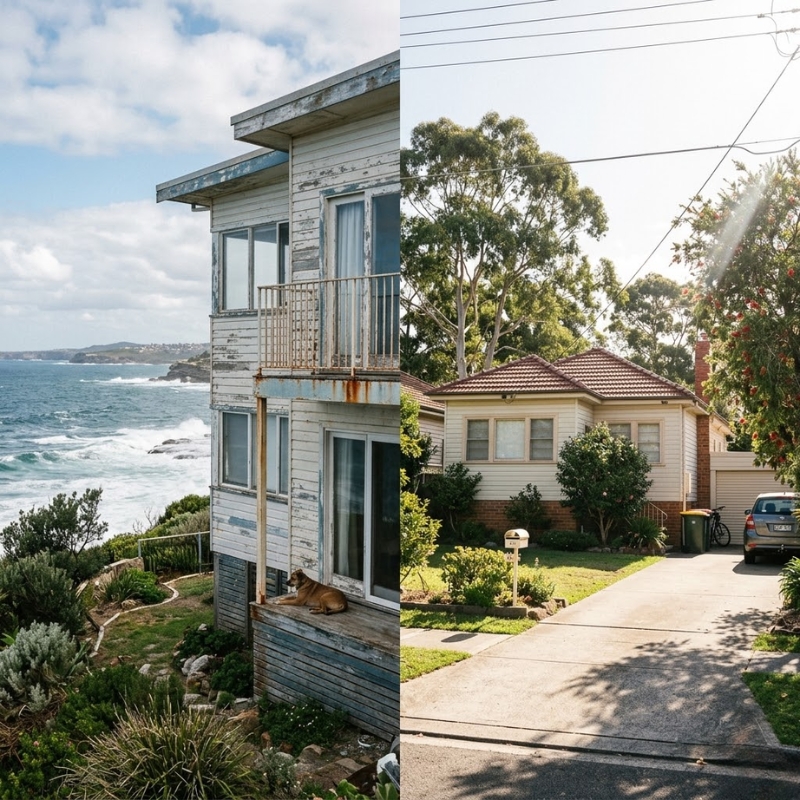
Sydney can be deceptive. Two houses can be the same age, painted in the same year, and look wildly different a few summers later — one still crisp, the other chalky, stained, or starting to peel around edges and fixings.
Often, the difference isn’t “better paint”. It’s exposure.
If you’re in the Eastern Suburbs, Northern Beaches, the harbour fringe, or parts of the Sutherland Shire, you’re dealing with a mix of:
• salt-laden air that sticks to surfaces
• wind that drives that salt into joints and porous materials
• higher humidity that slows drying and encourages surface growth
• strong UV that breaks down paint films faster
Move inland to places like Parramatta, Blacktown, Liverpool, or Penrith and the profile changes:
• less salt deposition
• often less “constant damp” in shaded coastal pockets
• different extremes (hotter summer days inland)
• dust and pollution can play a bigger role than salt
This guide breaks down what changes from suburb to suburb, what fails first, and what to do so your next exterior paint job lasts longer — without turning this into a sales pitch.
Why salt air is harder on paint than most people realise
Salt doesn’t just “sit there”. In coastal conditions, it tends to:
• attract and hold moisture on surfaces
• creep into tiny gaps and hairline cracks
• accelerate corrosion on metals and fixings
• make dirt and grime adhere more stubbornly
• contribute to early breakdown of the paint film, especially where prep is weak
The result is a familiar coastal pattern:
• peeling on exposed edges and laps
• bubbling or lifting around nail heads and joints
• rust stains bleeding through paint
• chalking and fading on sun-facing elevations
• mould/algae in shaded, damp areas
Q&A: Does living near the beach really shorten lifespan?
It can, especially on the weather-exposed sides of a home (often north-east/east in Sydney, where sea breezes and weather hit). The same coating system can perform very differently depending on wind exposure, salt build-up, and how often surfaces are washed down.
How far inland does “salt air” matter in Sydney?
People want a simple kilometre number, but real exposure depends on wind, elevation, and shelter.
A useful way to think about it:
• Open-coast + exposed sites (clifftops, headlands, beachfront): highest salt load
• Harbour-side (Rose Bay, Vaucluse, Mosman, Balmain): still salty, often with less direct surf spray but plenty of airborne salt
• A few kilometres inland: salt influence can remain, especially with prevailing winds and elevated sites
One practical benchmark used in maintenance guidance is that “coastal environments” may extend up to a few kilometres inland, depending on severity.
Instead of obsessing over a line on a map, use exposure cues:
• Can you smell salt on windy days?
• Do outdoor metal items rust faster than you’d expect?
• Do windows and outdoor furniture feel “gritty” after onshore winds?
• Does the coastal-facing elevation look dirtier sooner than sheltered sides?
If yes, treat your home as coastal-exposed even if you’re not right on the sand.
Coastal vs inland: What Actually Changes for Your Exterior
1) Corrosion shows up earlier near the coast
Paint failure in coastal suburbs often starts with what’s underneath — metal flashings, fixings, gutters, downpipes, balustrades, and steel lintels.
Early signs:
• tiny orange spots around nail heads or fixings
• rust streaks under balcony edges or window heads
• bubbling paint over metal corners
• “mysterious” stains that return after you clean them
Salt accelerates corrosion, and corrosion pushes paint off from below. If you only repaint the surface without treating the rust source, those stains tend to come back.
2) Moisture hangs around longer
Coastal humidity and shaded, sheltered streets can mean exterior surfaces dry more slowly, especially:
• south-facing walls
• tight side passages
• behind dense planting
• under eaves where air movement is poor
That slower dry-out can contribute to:
• mould/algae film on paint
• softening and loss of adhesion over time
• more frequent maintenance needs in shaded zones
3) UV and heat still matter — sometimes inland more than coastal
Inland Sydney can run hotter in summer, and high heat plus UV can:
• fade pigments faster
• increase chalking on lower-quality paint films
• expand and contract substrates more (timber movement, render cracking)
So while coastal homes fight salt + corrosion + humidity, inland homes often fight heat + UV + movement + dust.
What fails first on coastal homes (and where to look)
If you want to prevent big, expensive failure, inspect the “first-to-go” areas twice a year.
The coastal “hot spots”
• horizontal ledges and trim where salt collects
• window sills, head flashings, and drip edges
• balcony rails and metal balustrades
• gutters, downpipes, and fascia junctions
• timber end grain (deck posts, weatherboard edges)
• joints, gaps, and sealant lines that open and trap moisture
• shaded walls with dense vegetation nearby
A good routine is to inspect and clean coastal-exposed surfaces regularly. One maintenance guide recommends regular inspections and periodic coastal cleaning as part of caring for painted surfaces in salt-affected zones.
Q&A: Why does peeling often start at edges and joins?
Because edges and joins are where water and salt get in first. Once moisture creeps under the paint film, adhesion weakens and the paint lifts. Edges also take more mechanical wear from wind, sun, and movement.
The big durability lever most people ignore: washing down salt
If you do one thing differently near the coast, make it this: wash down exterior surfaces more often than you think you need to.
Salt build-up is invisible until it isn’t. By the time you see chalking, corrosion stains, or adhesion loss, the process has been happening for a while.
A simple, realistic approach:
• rinse salt-exposed elevations after periods of strong onshore winds (when practical)
• do a gentle wash (not aggressive blasting) as part of seasonal upkeep
• pay special attention to ledges, trims, and metalwork
This is also where exterior paint maintenance tips can extend the life of a coating system more than people expect. (And it’s much cheaper than repainting a few years early.) Use this guide as a next-step reference: exterior paint maintenance tips.
Prep differences that matter more in coastal suburbs
“Good prep” is a phrase everyone says. Coastal prep is more specific: you’re not just cleaning dirt — you’re removing salt, treating corrosion risk, and setting up better adhesion in a harsh environment.
Coastal prep priorities
• Thorough washing to remove salt deposits (especially on chalky/older coatings)
• Extra attention to rusted metal and fixings (treat, prime properly, don’t paint over active rust)
• Repairing gaps and cracks where salt and moisture can track behind paint
• Sanding and feathering to remove weak edges (coastal peeling often propagates from tiny failures)
• Priming bare timber and end grain properly (edges suck up moisture)
If you want a simple way to sanity-check prep scope before repainting, keep a repeatable coastal paint preparation checklist on hand. Here’s a starting point you can use: coastal paint preparation checklist.
Q&A: Is pressure washing always a good idea near the coast?
Not always. High pressure can:
• drive water behind cladding or into joints
• shred timber fibres
• remove sound paint edges and create more prep work
A safer approach is often a gentler wash method matched to the substrate and condition.
Product choice: what matters (without brand wars)
This isn’t about “premium vs budget” as a blanket rule. Durability comes from matching the coating system to the risks.
Coastal product considerations
• Coatings that hold up better to UV and moisture cycling
• Primers suited to corrosion risk and salty environments (especially on metals)
• Breathable systems where moisture movement is a factor (substrate-dependent)
• Finishes that are easier to clean (salt and grime maintenance is real)
Inland product considerations
• UV resilience and colour stability
• Flexibility where timber movement or render cracking is common
• Dirt pick-up resistance if your area is dusty or near busy roads
The best outcome is almost always system-based:
• prep + primer + topcoats matched to substrate and exposure
Not “one magic topcoat”.
Sydney examples: how exposure differs by suburb style
Northern Beaches (Manly to Palm Beach)
Often high exposure:
• onshore winds
• elevated sites
• open-coast spray
Expect faster wear on windward elevations and metalwork.
Eastern Suburbs (Bondi, Coogee, Bronte, Maroubra)
High UV + salt, plus plenty of properties with exposed façades. Render cracking and staining can become a recurring cycle if cracks aren’t addressed before repaint.
Harbour-side pockets (Rose Bay, Mosman, Balmain, Neutral Bay)
Salt exposure is still significant, and corrosion on rails, balustrades, and fixings is a common early failure point — particularly in shaded, sheltered courtyards where moisture lingers.
Inland hubs (Parramatta, Blacktown, Penrith)
Less salt, but heat and UV can be intense. Chalking and colour fade may lead the failure pattern, and dust can make surfaces look tired sooner.
A practical durability plan (that doesn’t require perfection)
You don’t need to become a full-time building caretaker. You just need a simple rhythm.
Every 6 months (especially coastal-exposed)
• walk around the house after a bright day
• check ledges, sills, and trims for early lifting
• look for rust spots, blistering, or hairline cracks
• rinse or wash salt-exposed sides if build-up is obvious
Regular inspections and coastal cleaning are commonly recommended in maintenance guidance for salt-affected painted surfaces.
Once a year
• do a more thorough wash (method matched to substrate condition)
• trim back vegetation that holds moisture against walls
• check sealants around windows/penetrations
• touch up small failures before they spread
After big weather events
• check gutters/downpipes and overflow points
• look for fresh staining under eaves or window heads
• inspect windward elevations for new cracks or water entry paths
Q&A: Why do some coastal homes still look great after years?
Usually a combination of:
• smart prep and correct priming at the start
• periodic wash-down to reduce salt load
• early touch-ups before peeling spreads
• good detailing (drip edges, sealed joints, controlled water paths)
It’s rarely “luck”.
When to stop and investigate (instead of repainting)
Repainting over the wrong underlying issue is the fastest way to shorten durability.
Pause and investigate if you see:
• recurring rust stains on the same lines or corners
• blistering that feels “hollow” (moisture pushing from behind)
• render cracks that widen seasonally
• persistent damp patches near planters or retaining walls
• peeling that returns within a year or two on the same elevation
If you’re seeing those patterns, it often helps to get a structured plan focused on causes and sequencing rather than just “another coat”. This is where help with exterior paint durability can save you from repeat work: help with exterior paint durability.
FAQs
Does salt air affect homes that aren’t right on the beach?
Yes. Exposure can extend inland depending on wind and shelter. If you’re noticing faster rusting, gritty residue, or quicker grime build-up on windward sides, treat the home as salt-exposed.
What’s the first sign that salt is damaging exterior paint?
Often it’s not peeling — it’s early corrosion spots, chalking, or persistent grime on exposed trims and metals. Rust staining under paint is a common early warning. Coastal (salt-affected) homes benefit from regular wash-downs and inspections — see the guidance in the Dulux Construction Solutions Paints & Coatings Care Guide.
Should I wash my house exterior more often near the coast?
Generally, yes. A practical routine of rinsing/washing salt-exposed elevations and inspecting problem areas can extend coating life compared to “set and forget”.
Why does paint peel more on one side of the house?
That’s usually the windward/weather-exposed elevation (sun + wind + salt + rain). Orientation and shelter matter as much as distance to water.
Is inland Sydney easier on paint than coastal Sydney?
Usually less corrosion risk from salt, but inland areas can be harsher for UV/heat, which drives fading and chalking. “Easier” depends on what you’re measuring.
Can I just repaint more often instead of doing extra prep?
You can, but it’s typically the most expensive way to manage the problem. Coastal failures often start underneath (salt, corrosion, moisture paths). Better prep and simple maintenance usually pay back fast.