
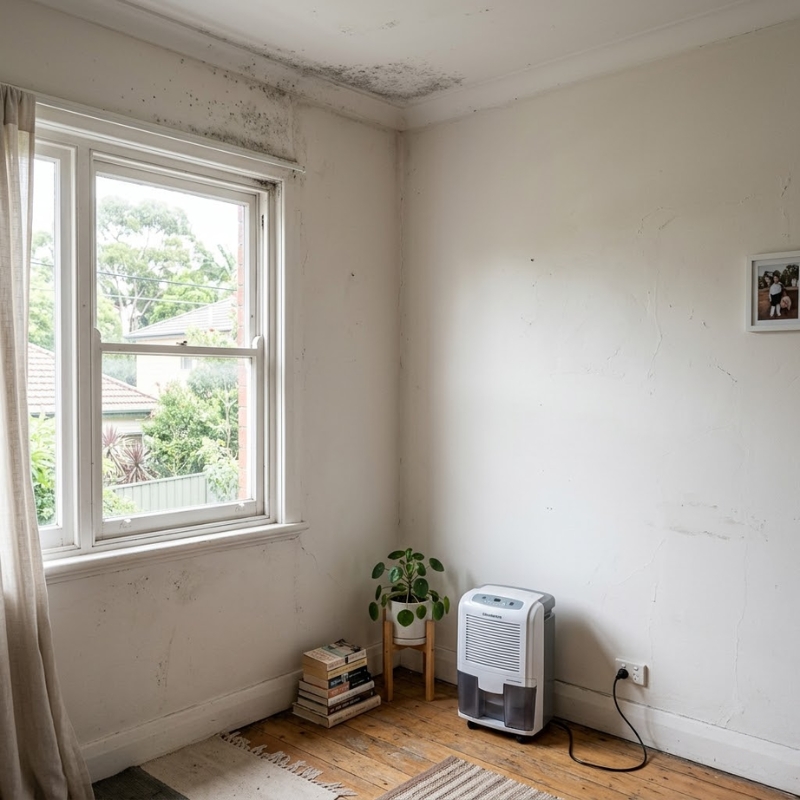
Mould on a wall is annoying. Damp patches are worse. But the most frustrating outcome is this: you clean it, repaint it, and a few weeks later the spotting is back — sometimes darker, sometimes wider, sometimes with paint starting to bubble or peel.
That repeat-fail loop happens because mould and damp are rarely “just a surface problem”. Paint is a finish coat, not a cure. If you seal the wrong thing at the wrong time, you can trap moisture, feed regrowth, and guarantee another repaint.
This guide is written for Sydney homes, where humid summers, cooler winter nights, and high-use wet areas (bathrooms and laundries) make mould and damp a common issue. You’ll learn the right order of operations, so your next paint job actually lasts.
The golden rule: fix moisture first, then deal with mould, then repaint
If you only remember one thing, make it this:
• Moisture source (why it’s damp)
• Mould removal (clean and treat safely)
• Drying (let the wall truly dry)
• Sealing (block stains and stabilise the surface)
• Repainting (with a suitable coating for the room)
When people repaint first, they’re often “locking in” the conditions mould loves most: a damp surface with limited airflow.
Mould, mildew, damp, and stains: what you’re actually looking at
Not every mark means the same thing. A quick reset:
• Mould: usually black, green, or brown spotting that can smear; often returns in the same pattern if moisture isn’t fixed
• Mildew: a lighter, surface-level fungal growth (still needs removal)
• Damp patch: a darker area that looks wet, cool, or slightly swollen; may have a tide line as it dries
• Stain: the “memory” of a past issue — water marks or ghosting that can bleed through fresh paint unless sealed
If the wall feels cool, smells musty, or looks darker after showers/rain, treat it as an active moisture issue until proven otherwise.
Quick Sydney-specific reality check: the three most common moisture sources
In Sydney, most mould and damp on interior walls trace back to one of these:
1) Condensation (especially winter + bedrooms + south-facing rooms)
Warm indoor air holds moisture. When that air hits a cold surface (external walls, corners, window reveals), water condenses. That invisible film is enough to feed mould — especially behind curtains, wardrobes, and furniture pushed hard against a wall.
Typical tells:
• spotting in corners or along ceiling lines
• mould behind beds or tall furniture
• issues are worse in winter mornings
• windows that regularly “sweat”
2) Wet-area humidity (bathrooms and laundries)
Steam from showers, poor exhaust, and damp towels can keep humidity high for hours. If the fan is weak, venting incorrectly, or not running long enough, the walls never fully dry.
Typical tells:
• mould above shower zones and ceilings
• spotting around exhaust fan cut-outs
• recurring mould on silicone and grout
• paint that softens, bubbles, or peels near moisture
3) Leaks and water ingress (roof, plumbing, gutters, flashing)
Some leaks are obvious. Many aren’t. Slow plumbing leaks behind walls and roof issues can keep plaster damp long enough for mould and paint failure to start.
Typical tells:
• staining that changes after rain
• a patch that grows or “moves”
• soft, crumbly plaster
• bubbling paint or lifted paper on plasterboard
If you suspect a leak, stop thinking about paint until the source is confirmed and repaired.
Before you touch the wall: 10-minute diagnostic checklist
Use this mini-checklist to avoid guessing.
• Smell test: musty odour suggests ongoing moisture
• Touch test: does it feel cool or slightly damp compared to nearby areas?
• Timing clue: worse after showers, cooking, rain, or winter mornings?
• Location clue: corners, window reveals, behind furniture, ceilings under bathrooms, or near downpipes?
• Surface clue: is the paint bubbling, chalky, or peeling?
• Ventilation clue: does the room have an exhaust fan, and do you run it long enough?
• Furniture gap: is furniture hard against an external wall?
• Wardrobe airflow: do you see mould in wardrobes or on leather/bags?
• Window behaviour: regular condensation on glass in winter?
• Repeat spot: same patch returning after cleaning/painting?
If you’re ticking multiple boxes, the problem is probably environmental (condensation/ventilation) or a slow moisture source — not “dirty walls”.
What to treat first (in the right order)
Step 1: Identify and fix the moisture driver
This is the step that determines whether the mould returns.
If it’s condensation:
• run exhaust fans during showers and for 15–20 minutes after
• open windows briefly for cross-ventilation when the weather allows
• avoid drying clothes indoors without ventilation
• keep a small gap between furniture and external walls
• consider a dehumidifier during the worst weeks of winter
If it’s wet-area humidity:
• clean or upgrade the exhaust fan (and confirm it vents outside, not into the roof space)
• reduce lingering steam (door ajar after showers if possible)
• fix grout and silicone, so water isn’t entering the wall linings
• wipe down wet surfaces after use in poorly ventilated bathrooms
If it’s a leak:
• fix the leak first (roof, plumbing, flashing, gutters)
• don’t seal or paint a wall you suspect is still wet
• if plaster is soft or swollen, it may need repair after drying
If you’re not sure whether you’re dealing with condensation or an active leak, NSW Health has practical guidance on recognising mould issues and reducing risk in the home. Use it as a safety baseline before you start cleaning. NSW Health mould information.
Step 2: Clean and treat the mould safely (don’t just “wipe it off”)
Once you’re confident the moisture driver is being addressed, you can remove the mould properly.
General principles:
• protect yourself (gloves, eye protection; consider a mask if you’re sensitive)
• ventilate the space while you clean
• avoid dry-scrubbing that spreads spores into the air
• don’t paint over active mould, even if it looks “light”
A practical approach in most homes:
• clean the surface to remove visible growth
• treat the area with an appropriate mould treatment product (follow label instructions)
• wipe residue away as directed
• allow the wall to dry thoroughly
If the growth is extensive, keeps returning quickly, or you have health concerns, consider professional help rather than escalating exposure.
Step 3: Let the wall dry properly (this is where most people rush)
Dry time is not a vibe. It’s measurable, and it matters.
Common reasons walls aren’t truly dry:
• damp trapped in plasterboard or render
• humid weather is slowing evaporation
• poor airflow in corners/behind furniture
• ongoing micro-leaks or persistent condensation cycles
Practical “is it dry?” checks:
• the area feels the same temperature as the surrounding wall
• no musty smell
• no visible darkening after showers/rain
• no bubbling or soft paint film
• a moisture meter reading (if you have one) aligns with the surrounding areas
If you repaint while it’s still drying, you can trap moisture behind a new film and create the perfect conditions for regrowth or adhesion failure.
Step 4: Deal with staining and surface stability before repainting
Even after mould is removed, you can be left with:
• brown/yellow water stains
• grey “shadowing” where mould was
• chalky paint that powders when rubbed
• damaged plaster or lifted paper face on plasterboard
This is where sealing and prep determine the final look.
You may need:
• light sanding (once fully dry) to smooth texture
• patching for damaged plaster
• a stain-blocking primer where discolouration exists
• a stabilising sealer if the surface is powdery/chalky
• a bonding primer if repainting over glossy or difficult surfaces
If you want a reliable sequence that prevents paint failure later, your prep matters more than brand choice. A good starting point is a consistent method for prepping walls before painting that includes cleaning, drying, sanding, dust removal, patching, and priming to suit the surface.
Step 5: Repaint with a system that matches the room
The “best paint” is the one suited to the environment.
Bathrooms/laundries:
• prioritise washability and moisture resistance
• choose an appropriate sheen for cleaning (very flat paints tend to hold marks)
• don’t rely on “mould resistant” claims as a substitute for ventilation
Bedrooms/living rooms with condensation risk:
• focus on airflow and humidity control first
• repaint only after the wall is genuinely dry
• consider layout changes that allow air movement (furniture gaps)
The key is remembering: mould-resistant coatings can slow surface growth, but they can’t fix wet walls.
Q&A block: the questions Sydney homeowners ask most
Can I paint over mould if I use mould-resistant paint?
Painting over mould is nearly always a short-term cosmetic cover-up. If mould is present, it needs removal, and the moisture driver needs fixing first. “Mould resistant” products can help reduce surface regrowth after proper treatment, but they don’t kill existing mould or solve damp.
Why does mould come back in the same spot after painting?
Because the cause stayed in place. Common culprits:
• condensation point (cold corner, poor airflow)
• bathroom humidity with an underperforming fan
• furniture/wardrobe blocking airflow
• a slow leak that never fully dried
Do I need to seal the wall after cleaning the mould?
Often, yes — especially if there are stains, a powdery surface, or patched areas. Sealing helps stop bleed-through and creates a stable surface for the topcoat.
How long should I wait before repainting?
Long enough for the wall to be fully dry. That could be days or longer, depending on the cause, substrate, and ventilation. If the problem was a leak, drying can take significantly longer than most people expect.
Common Sydney scenarios and what to do first
Scenario 1: Bathroom ceiling mould and peeling paint
Most likely: steam + insufficient ventilation.
Treat first:
• confirm fan works well and vents correctly
• run it longer (during shower + 15–20 minutes after)
• clean and treat mould
• dry thoroughly
• seal stains if needed
• repaint with a bathroom-suitable coating system
If paint is peeling, don’t just repaint over the edges — remove any loose paint, feather-sand, and prime correctly.
Scenario 2: Bedroom corner mould behind the bed
Most likely: condensation + blocked airflow.
Treat first:
• pull the bed/furniture off the wall slightly
• increase airflow (ventilation habits; dehumidifier during winter if needed)
• clean and treat mould
• dry the area
• seal and repaint if the finish is damaged
If this keeps happening every winter, paint won’t be the fix — airflow and humidity control will.
Scenario 3: A growing damp patch that changes after rain
Most likely: water ingress (roof/gutter/flashing).
Treat first:
• investigate and fix the exterior source
• dry the wall completely
• repair substrate (plaster may need patching/replacement)
• stain-block and prime
• repaint
Painting before the source is fixed is almost guaranteed to fail.
Scenario 4: Mould plus salty white deposits near the bottom of a wall
Possible: rising damp or moisture moving through masonry (efflorescence).
Treat first:
• investigate moisture source properly
• don’t seal it in with standard paint
• address the damp mechanism before cosmetic work
This is a “don’t wing it” scenario because the wrong approach can trap moisture and worsen deterioration.
The repainting “stack” that lasts (simple, not salesy)
When the wall is dry and stable, the durable approach generally looks like:
• Clean and treat (remove growth and residue)
• Dry thoroughly
• Sand lightly where needed
• Patch/repair damaged areas
• Prime/undercoat to match the surface issue (stain, bonding, or sealing)
• Apply topcoats suitable for the room’s moisture and cleaning demands
If you’d like a more room-specific sequence (bathroom vs bedroom vs living area), keep your process consistent and use a single reference framework for interior paint preparation tips so you’re not reinventing the wheel each time.
What not to do (even if it’s tempting)
• Don’t paint over visible mould “just to tidy it up”
• Don’t seal stains before the wall is dry (you can lock in moisture)
• Don’t rely on mould-resistant paint as your only strategy
• Don’t ignore ventilation (especially after showers)
• Don’t push furniture tight to cold external walls if condensation is an issue
• Don’t assume “it looks dry” means it is dry inside the substrate
Most repeat problems come from rushing drying time or skipping the moisture diagnosis.
When to escalate: signs you should get professional help
Some situations are beyond a simple clean-and-repaint approach:
• mould is widespread or keeps returning quickly
• anyone in the home has asthma or mould sensitivity, and symptoms worsen
• plaster is soft, swollen, or crumbling
• staining grows after rain (suspected leak)
• you suspect rising damp or ongoing water ingress
• paint is bubbling/peeling across large areas
In those cases, the best “next step” is to focus on diagnosing the moisture mechanism and planning the prep and coating system accordingly. If you need a structured approach to the wall condition and the repaint sequence, getting help with mouldy walls can prevent you from spending money twice.
FAQs
Is mould always caused by a leak?
No. In Sydney, a large chunk of mould is driven by condensation and humidity — especially in winter bedrooms and in bathrooms with weak ventilation. Leaks are still common, but not the only cause.
Can I just bleach the mould and paint over it?
Bleach isn’t a complete solution for many surfaces, and painting over mould without fixing moisture usually leads to regrowth. Treat the moisture driver, remove mould safely, let the wall dry, then seal and repaint.
Why do mould stains show through fresh paint?
Because stains can bleed through standard topcoats. After cleaning and drying, a suitable stain-blocking primer is often needed to stop ghosting.
Does “anti-mould paint” stop mould permanently?
It can help reduce surface growth, but it won’t fix damp, condensation, or leaks. If moisture remains, mould will often return around edges, corners, silicone lines, or wherever humidity stays high.
How do I reduce condensation in winter without freezing the house?
Short bursts of ventilation, targeted exhaust fan use, avoiding indoor clothes drying without ventilation, maintaining gentle, consistent heating, and using a dehumidifier during peak humidity periods can all help. The goal is to lower indoor moisture and improve airflow to cold surfaces.
Should I repaint straight after cleaning the mould?
Only after the wall is dry and stable. If you repaint too soon, you can trap moisture and trigger new mould growth or paint failure.