
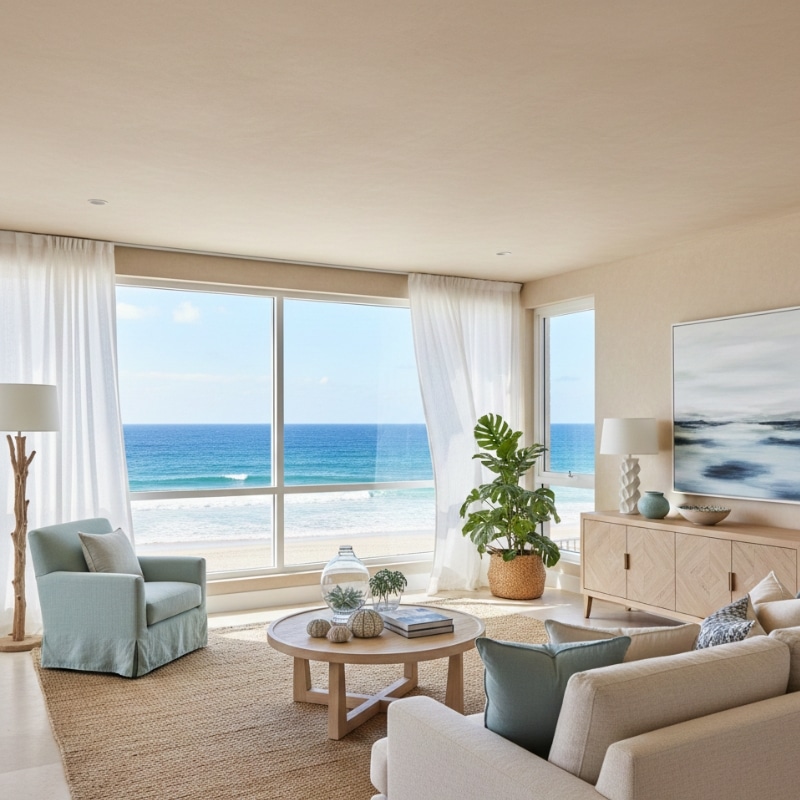
Living near the coast is one of Sydney’s biggest lifestyle perks, but coastal air, humidity, and fluctuating temperatures create unique challenges for interior painting inside the home. While colour choice often gets the most attention, paint finish selection plays an equally important role in how well interior walls hold up over time.
In coastal Sydney homes, the wrong paint finish can lead to premature wear, patchy sheen, moisture staining, or mould growth — even when high-quality paint is used. This guide explains how different paint finishes perform in coastal conditions, which rooms need extra consideration, and how homeowners can make smarter, longer-lasting decisions.
Why Coastal Sydney Homes Need Special Paint Finish Consideration
Sydney’s coastal suburbs experience:
• Higher average humidity
• Salt particles carried indoors through airflow
• Greater condensation in cooler months
• Strong natural light that exaggerates surface flaws
These factors don’t always damage paint immediately, but they accelerate finish breakdown if the wrong sheen is used in the wrong space.
Long-term exposure to indoor moisture and airborne particles can affect surface durability and mould risk, which is why understanding how indoor air quality and humidity behave inside coastal homes is an important part of choosing the right paint finish.
Paint finish affects:
• Moisture resistance
• Cleanability
• Mould risk
• How light reflects off walls
• How imperfections appear over time
Understanding this upfront helps avoid repainting sooner than expected.
Understanding Paint Finishes and How They Perform in Humidity
Paint finishes range from very flat to high gloss. Each behaves differently in coastal environments.
Matte and Flat Finishes
Matte finishes absorb light and minimise surface imperfections, which is why they’re popular in bedrooms and low-traffic areas.
However, in coastal Sydney homes:
• They absorb moisture more easily
• Salt residue can embed into the surface
• They’re harder to clean without burnishing
• They’re more prone to mould in poorly ventilated rooms
Matte finishes are best kept for:
• Adult bedrooms
• Formal living spaces away from kitchens and bathrooms
• Homes with good airflow and humidity control
They are not ideal for homes close to the ocean without consistent ventilation.
Low-Sheen and Eggshell Finishes
Low-sheen finishes strike a balance between appearance and durability. They reflect a small amount of light while offering better washability than matte.
In coastal conditions, low-sheen performs well because:
• It resists moisture better than flat finishes
• It’s easier to clean salt film and condensation marks
• It hides minor imperfections better than satin
This makes low-sheen one of the most versatile finishes for Sydney homes, especially in:
• Hallways
• Living areas
• Bedrooms with moderate airflow
For many homeowners, this is the safest all-round option.
Satin Finishes
Satin finishes offer higher durability and moisture resistance without the harsh shine of gloss.
Benefits in coastal homes include:
• Better resistance to humidity and condensation
• Improved mould resistance when paired with quality paint
• Easier cleaning for salt residue and fingerprints
Satin is well-suited to:
• Kitchens
• Children’s bedrooms
• Apartments with limited airflow
• Homes closer to the coastline
The trade-off is that satin highlights surface imperfections more than low-sheen, making surface preparation critical.
Semi-Gloss and Gloss Finishes
Gloss and semi-gloss finishes are the most moisture-resistant, but they come with visual compromises.
In coastal Sydney homes, they:
• Repel moisture effectively
• Are easy to wipe down
• Resist mould when applied correctly
However:
• They strongly highlight wall defects
• Poor prep becomes very visible
• They can look overly reflective in bright coastal light
These finishes are best reserved for:
• Trim and doors
• Bathrooms and laundries
• Feature areas exposed to frequent moisture
Using them across entire living spaces is rarely recommended unless walls are in excellent condition.
How Salt Air Affects Interior Paint Finishes
Even indoors, coastal salt air settles on surfaces over time. This residue:
• Attracts moisture
• Breaks down lower-quality finishes
• Makes walls feel sticky or chalky
• Encourages mould growth in shaded areas
Higher-sheen finishes resist salt accumulation better because they have tighter surface structures. Lower-sheen finishes allow particles to settle into microscopic pores, accelerating wear.
This is why homes closer to the water often benefit from slightly higher sheen levels than inland properties.
Room-by-Room Paint Finish Guidance for Coastal Homes
Living Rooms and Open-Plan Areas
These spaces receive:
• Strong natural light
• Airflow from doors and windows
• Frequent daily use
Best finish options:
• Low-sheen for balanced durability
• Satin for apartments or homes near the coast
Avoid very flat finishes unless airflow and humidity control are excellent.
Bedrooms
Bedrooms experience lower wear but can still trap moisture overnight.
Best finish options:
• Low-sheen for durability
• Matte only in well-ventilated homes away from the shoreline
Children’s bedrooms often benefit from satin due to its cleanability.
Kitchens
Kitchens combine:
• Steam
• Temperature changes
• Grease particles
Best finish options:
• Satin on walls
• Semi-gloss on trims
Lower-sheen finishes often fail prematurely in coastal kitchens due to moisture buildup.
Bathrooms and Laundries
These are the most moisture-prone rooms in any coastal home.
Best finish options:
• Semi-gloss or moisture-resistant satin
• Paired with mould-inhibiting paint systems
Flat or low-sheen finishes are not suitable in these areas, regardless of paint quality.
Hallways and Stairwells
High traffic combined with coastal dust and salt makes durability important.
Best finish options:
• Low-sheen for most homes
• Satin in narrower or darker hallways
These finishes clean easily without showing excessive wear.
Common Paint Finish Problems in Coastal Sydney Homes
Many finish failures are blamed on paint quality when the real issue is finish selection.
Patchy or Uneven Sheen
Often caused by:
• Flat or low-sheen paint in humid spaces
• Moisture absorption alters reflectivity
Bubbling or Peeling
Usually linked to:
• Moisture trapped behind lower-sheen finishes
• Inadequate prep in high-humidity areas
Persistent Mould Spots
Common when:
• Flat finishes are used in bedrooms or bathrooms
• Ventilation is limited
• Walls stay cool and shaded
In these cases, reassessing the finish is just as important as repainting.
When Finish Choice Isn’t Enough
If a coastal home shows:
• Recurring mould despite cleaning
• Peeling or bubbling across multiple rooms
• Salt residue buildup that returns quickly
In many coastal homes, recurring finish problems are often linked to inadequate prep rather than paint quality. Understanding what preparation is needed for interior painting can make a significant difference to how well finishes perform in humid, salt-affected environments.
There may be deeper issues with surface prep, moisture management, or coating compatibility. This is often when homeowners seek advice from interior painting specialists who understand Sydney’s coastal conditions and how to address them at the system level, not just the surface.
How Often Should Coastal Homes Reassess Paint Finishes?
While paint colour trends change, finish performance should be reviewed:
• Every 5–7 years in coastal homes
• Sooner in high-moisture rooms
• After renovations that affect airflow or insulation
Homes near the water may require more durable finishes than originally used, especially as humidity patterns change.
Frequently Asked Questions
What paint finish is best for coastal Sydney homes?
Low-sheen and satin finishes perform best overall, offering durability, moisture resistance, and easier cleaning without excessive shine.
Does higher sheen always mean better moisture protection?
A higher sheen improves moisture resistance, but it also highlights imperfections. The right balance depends on room conditions and wall quality.
Can the wrong paint finish cause mould problems?
Yes. Flat finishes absorb moisture more easily, increasing mould risk in humid or poorly ventilated spaces.
Should coastal apartments use different finishes than houses?
Apartments often benefit from satin finishes due to reduced airflow and shared walls that retain moisture.
How close to the ocean does finish choice really matter?
Even homes several kilometres inland can experience coastal effects in Sydney. Finish durability becomes more important the closer the property is to the coast.
Final Thoughts: Choosing Smarter Paint Finishes for Coastal Living
In Sydney’s coastal suburbs, paint finish choice directly impacts how long interior walls stay fresh, clean, and mould-free. By selecting finishes that match humidity levels, room use, and airflow, homeowners can significantly extend repaint cycles and avoid common failures.
If you’re unsure whether your current finishes are suitable — or you’re planning updates in a moisture-prone home — guidance from professional interior painters in Sydney can help identify the right approach before issues appear.