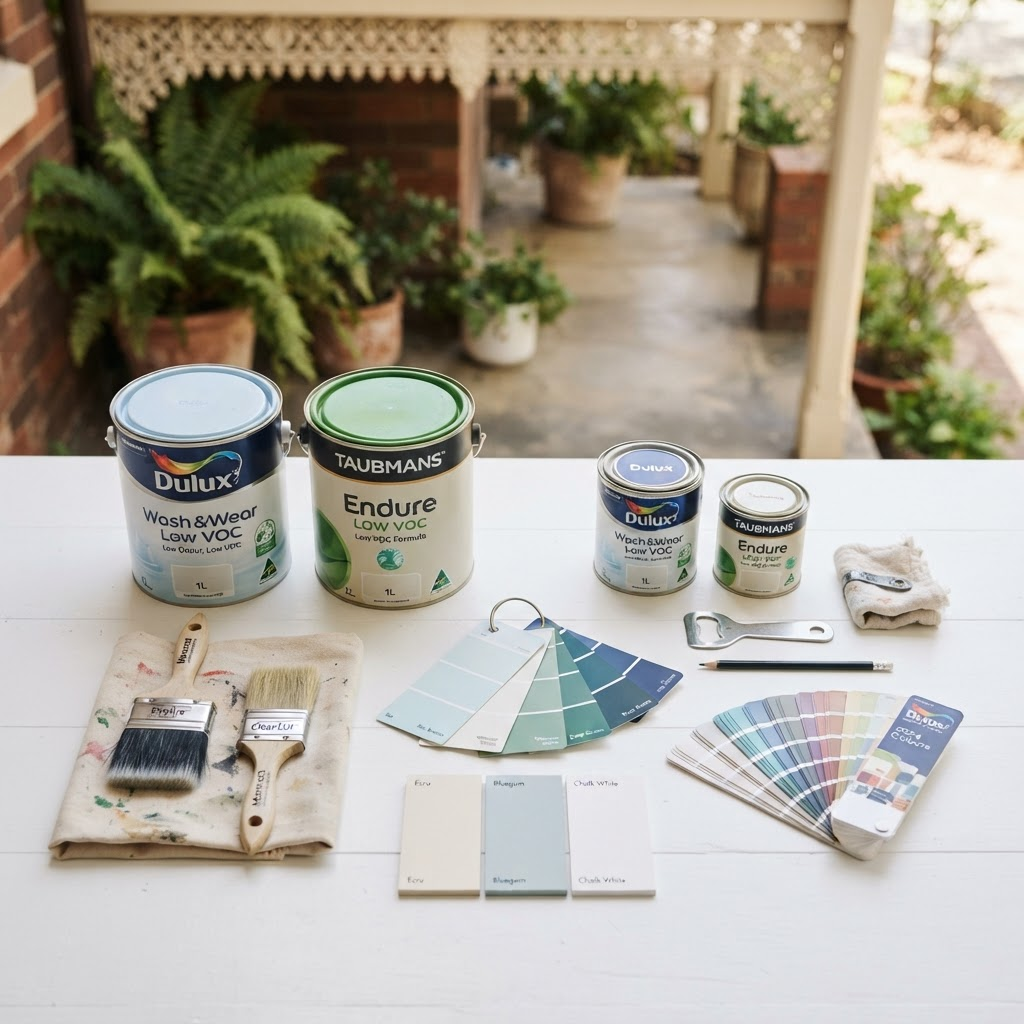
Sydney homes cop a particular kind of daylight: bright, crisp, and often more intense than people expect once it hits a big white wall. Add hard summer glare, reflective tiles, glass balustrades, pale floorboards, and modern LED lighting, and it’s no surprise paint colours can look very different on the wall compared to the tiny card you picked up in-store.
If you’ve ever had a quick chat with a Sydney painter about “colour regret”, you’ll hear the same pattern: the colour wasn’t necessarily a bad choice on the swatch — it just reacted to the home’s light direction, finishes, and undertones in a way the swatch couldn’t show.
This guide gives you a practical, repeatable system for choosing colours that hold up in real Sydney conditions, across day, night, and season. You’ll learn how undertones work (without the fluff), how room orientation changes everything (in Australia, not the Northern Hemisphere), and exactly how to test colours so you don’t get surprised after the first coat.
Why do paint colours behave differently in Sydney
Paint doesn’t exist in isolation. It’s a reflective surface that bounces whatever light and surrounding colour it’s given. Sydney’s environment and housing mix make that effect stronger.
Here are the usual Sydney-specific culprits:
• Strong daylight can wash out mid-tones, making colours look lighter and cleaner than expected
• Afternoon glare (especially west-facing living areas) can make pale colours feel harsh and make warm tones look more intense
• Coastal light can skew cool and “blue” at times, especially in homes near the water or with big sky exposure
• Open-plan spaces mean you see multiple walls at once, so clashing undertones become obvious
• Cool-white LEDs can make greys go steely, whites go icy, and some beiges look dull at night
Step 1: Work out your room orientation (Sydney edition)
A lot of online advice quietly assumes Northern Hemisphere sun paths. In Australia, the sun tracks through the northern sky. That changes how “warm” and “cool” rooms feel.
A simple, Sydney-friendly rule of thumb:
• North-facing rooms: steadier, more consistent daylight; colours are usually easier to predict
• East-facing rooms: bright morning light, then cooler/softer later; colours can swing during the day
• West-facing rooms: harsh afternoon light and glare; colours can look bleached, over-bright, or “too much” late day
• South-facing rooms: lower, cooler light; colours can look flatter, and undertones show up more strongly
If you want a clear explanation of how orientation works in Australian homes, this is a solid reference: YourHome’s guide to orientation.
What orientation means for colour choices
Use orientation to decide whether you need to warm something up, soften it, or deepen it.
• Very bright rooms (north/west with lots of glazing): consider slightly softer or deeper tones to reduce glare and “clinical” brightness
• Low-light rooms (south-facing, shaded terraces, blocked-in apartments): a touch of warmth often prevents the room from feeling cold or grey
• Swing-light rooms (east/west): testing matters more because the colour can change dramatically between morning and afternoon
Step 2: Understand undertones (the part that makes or breaks neutrals)
Undertone is the subtle base colour underneath what you think you’re choosing. Two paints can both look like “warm white” on a card, yet one has a yellow undertone and the other has a pink undertone. On a full wall in Sydney light, they’ll look completely different.
Common undertone families:
• Warm undertones: yellow, cream, peach, red-brown
• Cool undertones: blue, violet, blue-grey
• Sneaky neutrals: green-grey, taupe (pink-brown), and “greige” that shifts depending on light
A fast undertone test you can do at home
Do this before you buy multiple sample pots:
• Hold the swatch next to true white printer paper (not off-white)
• Then hold it next to something warm (a cream tile, warm-white fabric)
• View it in three spots: near a window, mid-room, and in a shadow corner
What you’re looking for:
• If it suddenly looks a bit green next to white, it has a green undertone
• If it reads pink/peach next to white, it leans warm in that direction
• If it looks noticeably blue in shadow, it’s cool and may feel colder at night
Step 3: Let your fixed finishes lead the decision
Paint is flexible. Most fixed finishes aren’t. Before picking wall colour, list what’s staying:
• Flooring (warm timber, cool grey boards, tiles)
• Benchtops and splashbacks (stone often has strong undertones)
• Joinery colour (warm white vs cool white cabinetry)
• Bathroom tiles (often cooler)
• Curtains and large rugs
• Exterior brick/roof colour (for external palettes)
Now match paint undertones to those finishes:
• Warm timber + warm stone: warm whites, soft beiges, warm greiges usually sit better
• Cool tiles + chrome fixtures: cooler whites and cooler greys can look cleaner
• Mixed finishes: aim for balanced neutrals, then test carefully so nothing goes green/pink unexpectedly
A practical shortcut
If you can’t decide whether your home is “warm” or “cool”, take a photo of your floor and benchtop in daylight and compare them to a true white sheet of paper in the same frame. Warm finishes look cream/yellow/brown next to white. Cool finishes look blue/grey next to white.
Step 4: Choose the base neutral first, then build accents
In Sydney homes (especially open-plan), a calm, neutral base is the backbone. Once that’s right, everything else becomes easier.
A reliable sequence:
- Choose the main wall colour for the largest connected space
- Choose the trim/ceiling white that doesn’t clash
- Choose accent colours last (feature walls, cabinetry colours, doors)
Why this works: it stops you falling in love with an accent colour and then bending every other choice around it.
Choosing whites in Sydney without ending up too stark
White can look incredible in Sydney — but it can also be blinding in strong daylight or cold at night under cool LEDs.
Use this simple guide:
• Warm finishes (timber, warm stone): avoid icy whites; consider warmer or softly neutral whites
• Cool modern finishes (cool greys, lots of glass): avoid overly creamy whites; consider cleaner neutral whites
• Low-light rooms: very cool whites can read grey/blue; a touch of warmth often feels better
Q&A: Should I make everything the same white?
Sometimes that’s the easiest way to keep things calm, but it can also flatten the home. Many Sydney interiors look more polished with a slightly different trim colour (or a different sheen) to create gentle separation without “contrast drama”.
Step 5: Heat and glare matter (especially for exteriors and west-facing rooms)
Dark colours generally absorb more heat. In Sydney summers, that can matter on sun-exposed walls, especially west-facing elevations. Indoors, very bright rooms can also make colours feel more intense than expected.
Practical takeaways:
• If you love a darker exterior, consider using it on sheltered elevations or as accents rather than full coverage
• In harsh afternoon light, softer mid-tones can feel easier on the eye than very pale reflective colours
• Lower sheen on walls can reduce glare and help a space feel calmer
Q&A: Does choosing a darker colour always make a room feel smaller?
Not always. In bright rooms, slightly deeper colours can actually make a space feel more balanced and less glaring. The key is choosing the right undertone and testing it in the brightest conditions the room gets.
Step 6: Sheen changes the colour (and the vibe)
Sheen affects reflectivity, which affects perceived colour. People often choose colour first and finish last, then wonder why the wall doesn’t look like the sample.
A simple finish approach:
• Walls: low sheen for living areas (soft, forgiving, modern)
• Wet areas: more durable finishes where needed (but note higher sheen shows more surface imperfections)
• Trims/doors: a higher sheen can look crisp and is easier to wipe clean
Q&A: Why did my colour look darker after we chose a different finish?
A higher sheen reflects more light, which can exaggerate contrast and make the same colour appear different across highlights and shadows. Always test the colour in the finish you plan to use.
Step 7: Test properly (so the wall matches what you imagined)
Testing is where confident colour choices happen. The goal is to test large enough, in the right spots, across day and night.
Do this:
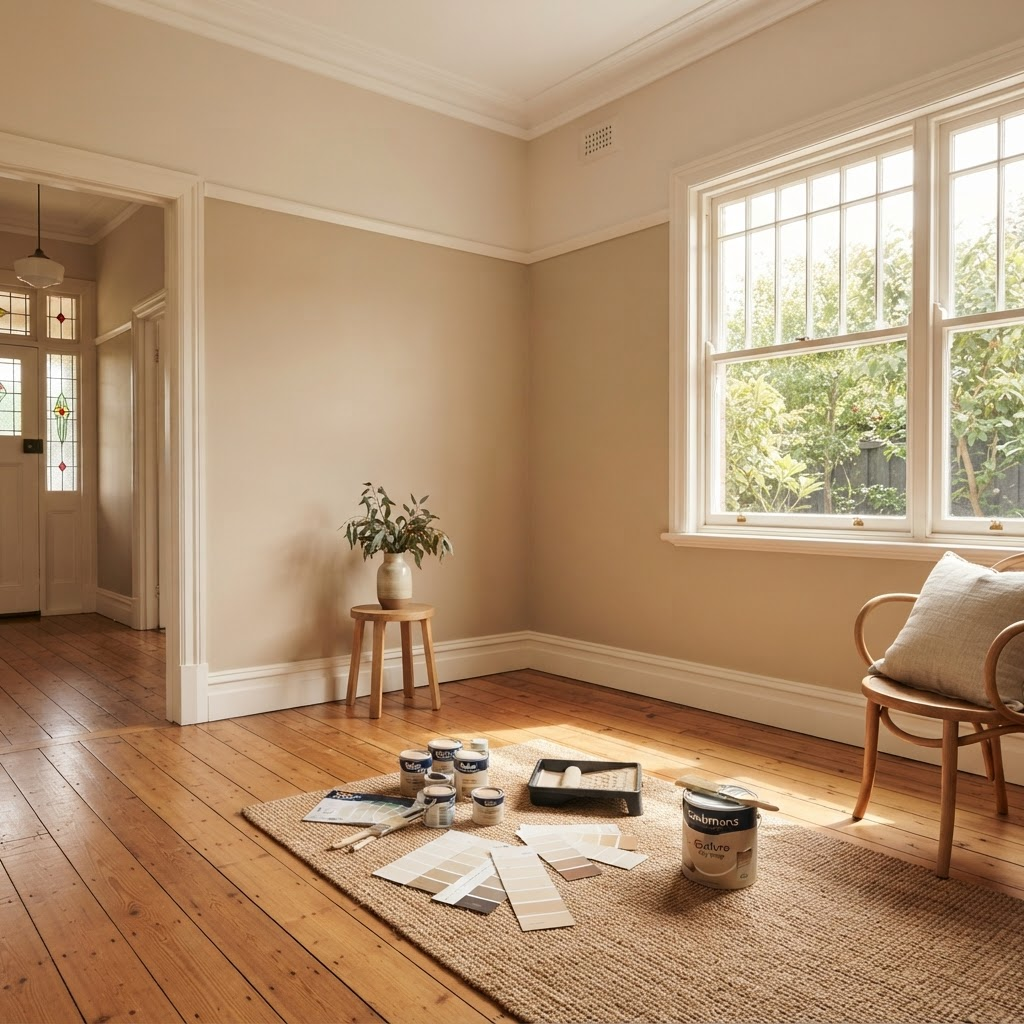
• Buy sample pots of your top 2–3 options
• Paint two coats onto A3–A2 boards (or heavy paper), not directly onto the wall
• Move boards around: near the window, mid-room, and a shadow corner
• Check three times: morning, late afternoon, and night with your usual lights on
• View next to floors, benchtops, and soft furnishings
Why boards work: they let you isolate the colour and compare multiple options without the existing wall colour “contaminating” your judgement around the edges.
A Sydney-specific testing tip
If you have strong afternoon glare (common in west-facing living spaces), do one check around late afternoon when the sun is harshest. That’s when “almost perfect” colours reveal their worst habits.
Q&A: How many sample colours should I test?
Two or three is ideal. More than that becomes visual noise because your eyes adapt. If you’re tempted to test six, narrow first by undertone family, then test within that family.
Sydney home scenarios (and what usually works)
1) Open-plan apartment with lots of glass
Big glazing and reflective surfaces make colours read cleaner and often lighter.
What tends to work:
• Soft neutrals with controlled undertones (avoid wild undertone shifts)
• Slightly deeper light neutrals to reduce glare
• Careful night testing under LEDs, because apartments often use cooler lighting
2) Narrow terrace or semi with shaded rooms
Lower light means undertones show up more and colours can feel cooler.
What tends to work:
• Warmer off-whites and gentle warm neutrals
• Avoid very cool greys in dim areas (they can look blue and flat)
• A consistent palette to keep the home connected from front to back
3) Coastal suburb home
Coastal light can pull cool/blue at times, and exteriors are more exposed.
What tends to work:
• Mid-tones that won’t feel harsh in the sun
• Exterior testing on the actual wall surface (light outdoors is unforgiving)
• Interiors that don’t fight cool coastal light (watch cool greys that can go steely)
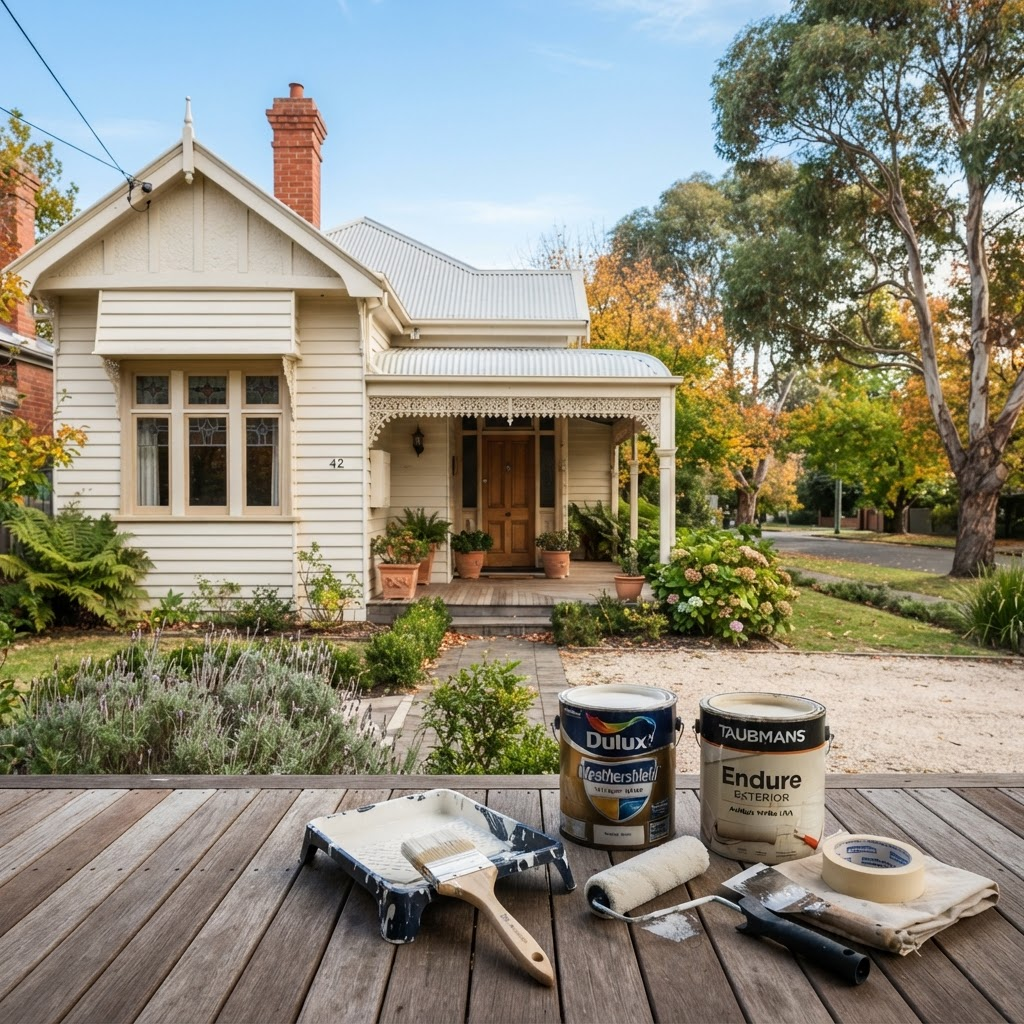
4) Federation / Californian bungalow
Warm timber and heritage details often dominate, and some rooms get less daylight.
What tends to work:
• Warmer neutrals that sit naturally with timber
• Trim whites that don’t look stark against heritage features
• Accents that respect the home’s character without tipping into “too traditional”
A simple system you can follow every time
If you want one approach that works again and again:
- Confirm room orientation and identify glare zones
- List fixed finishes and decide: warm, cool, or mixed
- Choose one undertone family that suits those finishes
- Pick a base neutral for the largest connected space
- Choose trim/ceiling colour to harmonise (not fight)
- Test 2–3 options on boards, day and night
- Confirm sheen choices before locking them in
If you’d like a simple way to pull your ideas into a cohesive palette (especially in open-plan spaces), start by mapping out your priorities for colour planning for your home.
When colour problems aren’t colour problems
Sometimes the “wrong colour” is actually a surface issue. Patchy repairs, old glossy paint, staining, or unsealed areas can change how colour reads and how evenly it dries.
Warning signs worth taking seriously:
• Glossy patches mixed with matte areas (the wall will look uneven)
• Water stains, nicotine stains, or old adhesive marks (can bleed through)
• Bubbling, flaking, or powdery chalking (especially outside)
• Persistent mould or damp marks (colour won’t fix moisture)
In those cases, solving the underlying issue matters as much as choosing the colour. If you want a second set of eyes to sanity-check undertones and whether the surface will throw the colour off, help with house painting colour selection can make the decision feel a lot less like guesswork.
Q&A: Why does the same colour look patchy on one wall but fine on another?
Different substrates and prep levels change absorption. A repaired wall, an old oil-based surface, or a wall with previous staining can all cause uneven sheen and uneven colour appearance. Consistent prep is what makes colour look consistent.
Matching an existing colour without playing guessing games
Trying to match “the white we already have” sounds simple, but ageing, sunlight, and different sheens can make the existing paint look different from its original formula.
A smarter approach:
• Find the least-faded spot (behind artwork, inside a cupboard, behind curtains)
• Compare new swatches to that hidden area in daylight
• If it must be exact, consider professional colour matching rather than eyeballing it
• Keep the sheen consistent if you want the match to look consistent
If you’re aiming for a consistent look from room to room (and you want your whites, trims, and finishes to stay coherent in different light), taking a whole-home approach like high-quality painting for Sydney homes helps everything land more evenly — not just the colour, but the final feel.
Q&A: Can I just take a photo of the wall and colour match from that?
Photos lie. Cameras auto-correct for lighting and white balance, which can shift undertones dramatically. Use physical swatches and daylight comparisons instead.
Quick troubleshooting: what your colour shift is telling you
If you’re already testing colours and something feels “off”, here’s what the shift usually means:
• Looks green in the afternoon: likely a yellow-based neutral reacting to glare or nearby greenery
• Looks pink at night: warm undertone + warm lighting, or contrast with cool finishes
• Looks blue in shadow: cool undertone amplified by low light or cool LEDs
• Looks “dirty” or muddy: undertone clash with flooring/stone, or lighting temperature mismatch
• Looks too bright/white: high LRV colour + strong daylight + reflective finishes
If you can identify the pattern, you can adjust with intent (warmer, cooler, deeper, softer) rather than starting from scratch.
FAQs
What’s the safest neutral if I’m worried about undertones?
The safest neutral is the one that matches your fixed finishes. If your floors and stone read warm, choose a warm-leaning neutral. If they read cool, choose a cool-leaning neutral. If they’re mixed, choose a balanced neutral and test it properly in your light.
Why does my beige look pink in some rooms?
Pink undertones show up in shadow or when paired with cool greys and cool tiles. It can also happen if your lighting is warm and your beige has a subtle peach base. Compare it to true white paper to reveal the undertone.
Why does my grey look green?
Green undertones pop when the room reflects greenery (gardens, trees) or when warm timber floors and yellow-based greys mix. Test in a shadow corner and next to true white to spot it early.
Should I choose colours in-store or at home?
Shortlist in-store, decide at home. Store lighting rarely matches your daylight or your night lighting. Always test at home on boards with two coats.
How do I choose the right white for trims and ceilings?
First, decide if your wall colour is warm or cool. Then choose a trim/ceiling white in the same temperature family so it doesn’t clash. Test the trim and wall side-by-side in daylight and at night.
Will dark exterior colours make the house hotter?
Darker colours generally absorb more heat. If you love a dark look, consider using it as an accent or on sheltered elevations, and always test it on the actual exterior wall in full sun and late-afternoon light.
What’s the biggest mistake people make when choosing paint colours?
Choosing from a tiny swatch without testing and ignoring undertones. The second biggest is choosing a feature colour first and then forcing everything else to match it.