
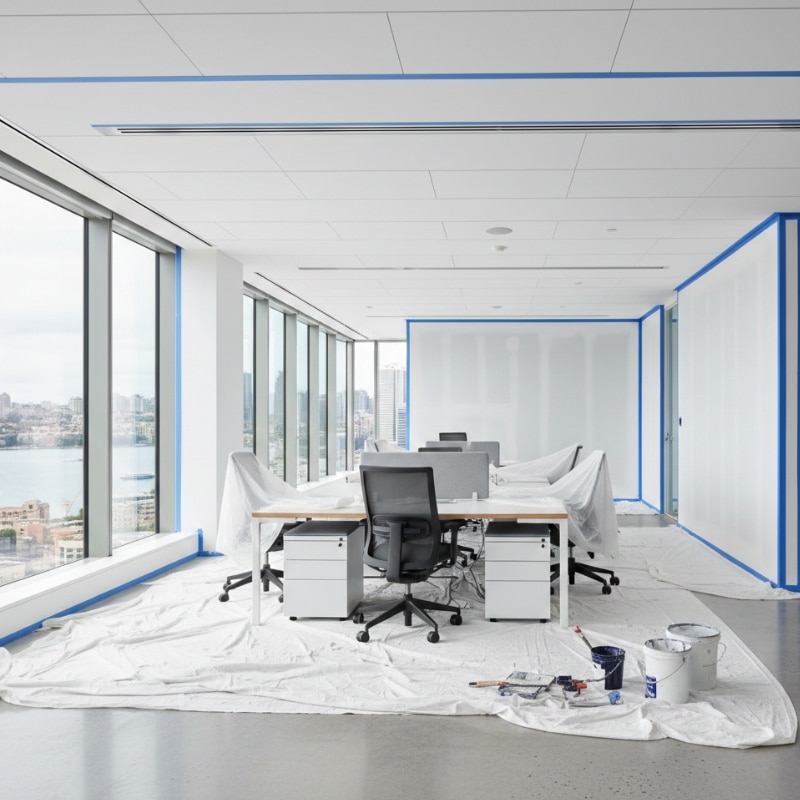
Repainting an office is one of the most effective ways to refresh a workplace, improve staff morale, and present a professional image to clients. But for Sydney businesses, poor planning can quickly turn a simple repaint into lost productivity, unnecessary downtime, and avoidable costs.
This checklist is designed to help business owners, office managers, and facilities teams plan an office repaint properly — with a clear focus on choosing the right paint finishes, preparing the space, and minimising disruption in real-world Sydney workplaces.
Whether you operate from a small suburban office or a multi-level CBD building, working through these steps before painting begins can make a measurable difference to outcomes.
Why a Checklist Matters for Office Repainting
Office repainting is very different from residential painting. Workspaces have higher foot traffic, tighter schedules, safety considerations, and often shared tenancy or strata rules.
A structured checklist helps businesses:
- Reduce downtime and disruption to staff
- Avoid rework caused by poor preparation
- Select finishes that last longer in high-use areas
- Coordinate painting around business operations
- Meet workplace health and safety expectations
Skipping planning often leads to rushed decisions on finishes, unrealistic timelines, and unexpected delays once work begins.
Step 1: Assess the Current Condition of the Office
Before any paint colours or finishes are discussed, it’s important to understand what you’re working with.
Inspect walls, ceilings, and high-wear areas
Walk through the office and note:
- Scuff marks and stains in corridors and meeting rooms
- Peeling, cracking, or bubbling paint
- Damage around door frames, corners, and light switches
- Discolouration from sunlight or poor ventilation
High-traffic areas usually show wear first, which directly impacts the type of finish that should be used later.
In many Sydney workplaces, this initial assessment is where businesses first realise the scope of work involved and begin researching appropriate office painting services to support the project.
Identify problem areas early
Common office problem zones include:
- Reception areas
- Hallways and walkways
- Kitchens and breakout spaces
- Printer rooms and storage areas
Flagging these areas early helps avoid last-minute changes once painting starts.
Step 2: Choose the Right Paint Finishes for Office Spaces
Paint finish selection is one of the most overlooked parts of office repaint planning. The wrong finish can lead to rapid wear, visible marks, and higher long-term maintenance.
Understanding common paint finishes
Each finish behaves differently in a commercial environment:
- Matte / Flat: Low sheen, hides imperfections, but marks easily
- Low sheen / Eggshell: Slight sheen, easier to clean, good balance for offices
- Satin: More durable and washable, ideal for moderate traffic areas
- Semi-gloss: High durability, moisture resistant, highlights imperfections
- Gloss: Extremely durable but rarely suitable for large wall areas
Best finishes by office area
Choosing finishes based on usage improves durability and appearance:
- Reception areas: Low sheen or satin for easy cleaning without glare
- Workspaces: Low sheen to reduce reflections on screens
- Corridors and hallways: Satin for higher durability
- Kitchens and break rooms: Semi-gloss for moisture and stain resistance
- Doors and trim: Semi-gloss or gloss for longevity
This is also where input from professional office painters in Sydney can help align finish choices with real-world wear patterns and maintenance expectations.
How the finish choice affects maintenance
Higher-sheen finishes:
- Are easier to clean
- Show surface imperfections more clearly
- Last longer in high-touch areas
Lower-sheen finishes:
- Hide wall flaws better
- Are less forgiving of scuffs
- May need repainting sooner in busy zones
Balancing appearance with long-term upkeep is key.
Step 3: Plan Paint Finishes Around Office Usage
Not all offices operate the same way. A law firm, creative agency, medical practice, and call centre will all have different demands.
Consider staff movement patterns
Ask:
- Where do staff walk most frequently?
- Which walls are touched or leaned against?
- Are trolleys, chairs, or equipment moved regularly?
High-contact zones benefit from more durable finishes, even if the rest of the office does not.
Account for clients and visitors
Client-facing areas should prioritise:
- Cleanability
- Consistent appearance
- Professional finish
This is often where investing in better-performing finishes pays off.
Step 4: Prepare the Office Space Properly
Preparation is one of the biggest factors affecting how long an office repaint lasts.
Declutter and organise
Before painting begins:
- Remove personal items from desks
- Clear shelves, cabinets, and window sills
- Secure or relocate sensitive equipment
This not only protects belongings but also speeds up the painting process.
Furniture and equipment planning
Decide in advance:
- What can be moved within the office
- What needs to be removed temporarily
- What must stay in place and be protected
Poor furniture planning often causes delays once painters arrive.
Wall repairs and surface prep
Common prep tasks include:
- Filling holes from removed fixtures
- Repairing dents and cracks
- Sanding uneven surfaces
- Cleaning grease or grime
For larger spaces or offices with extensive wear, this preparation stage is often the deciding factor between a smooth outcome and costly rework during commercial office repainting projects.
Step 5: Downtime Planning for Sydney Businesses
Downtime planning is critical in Sydney, where office space is often shared, access is controlled, and business hours are tight.
Decide when painting should occur
Options include:
- After-hours painting
- Weekend work
- Staged painting during business hours
Each approach has trade-offs between speed, cost, and disruption.
Staged repainting strategies
For larger offices, staging work can reduce downtime:
- One department or floor at a time
- Rotating teams to alternate spaces
- Temporary work-from-home arrangements
This approach keeps operations running while work progresses.
Noise, odour, and access considerations
Businesses should plan for:
- Paint odour sensitivity
- Noise from preparation work
- Lift and loading dock access
- Building management restrictions
Many Sydney strata buildings have strict rules that must be followed.
Step 6: Health and Safety Considerations
Workplace safety obligations apply during repainting, even when contractors are involved.
Ventilation and air quality
Ensure:
- Adequate airflow during and after painting
- Low-VOC paints where possible
- Clear communication with staff about re-entry times
SafeWork NSW provides guidance on maintaining safe work environments during maintenance activities.
Managing shared spaces safely
If staff remain on-site:
- Clearly mark work zones
- Restrict access to wet paint areas
- Ensure walkways remain clear
Safety planning protects both staff and contractors.
Step 7: Final Pre-Paint Checklist
Before painting starts, confirm:
- Paint finishes are selected by area
- Prep work is complete
- Furniture movement is scheduled
- Downtime strategy is confirmed
- Building approvals are in place
- Staff have been informed
Running through this checklist reduces surprises once work begins.
Frequently Asked Questions
How long does an office repaint usually take?
Timelines vary depending on size, preparation needs, and staging. Small offices may take a few days, while larger spaces can take one to two weeks when staged properly.
What paint finish lasts longest in offices?
Satin and semi-gloss finishes generally last longer in high-traffic areas due to better durability and cleanability.
Can offices stay open during repainting?
Yes, with proper staging, after-hours work, and downtime planning, many Sydney offices remain operational during repainting.
Is low-VOC paint necessary for offices?
Low-VOC paints are strongly recommended to reduce odours and maintain indoor air quality, especially when staff are on-site.
What causes most office repaint delays?
Poor preparation, unclear finish choices, furniture issues, and unplanned access restrictions are the most common causes.
Final Thoughts
A well-planned office repaint is less about paint and more about preparation, finish selection, and timing. By working through a structured checklist, Sydney businesses can reduce downtime, improve durability, and achieve a professional result that lasts.
Careful planning upfront almost always costs less than fixing mistakes later.