
Low-VOC vs Traditional Paints: Is the Air in Your Sydney Home Safer in 2026?
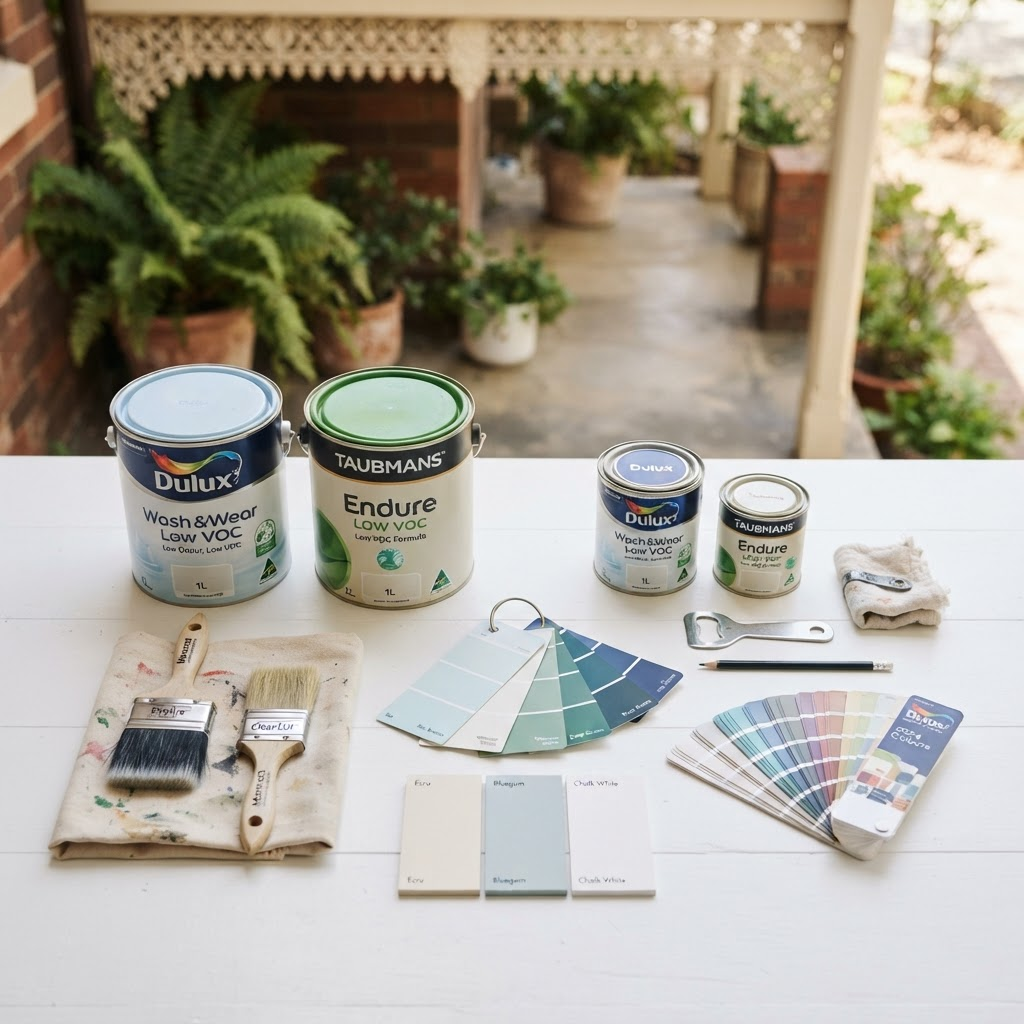
Why VOCs Still Matter
Volatile organic compounds evaporate at room temperature and mingle straight into the air you're breathing. In a freshly painted Surry Hills terrace that shows up as the unmistakable smell, watery eyes, and for some people a tension headache that won't shift. The heaviest solvent loads sit in oil-based enamels, which carry the pigment in an organic solvent. Standard water-based acrylics are far lighter than that, though they still contain co-solvents and coalescing agents that off-gas as the film forms. Low-VOC formulations cut those additives back further again. So when you're flicking through colour charts for an autumn refresh, the binder behind the hue deserves as much thought as the shade itself. For deeper guidance on surface prep, finishes and scheduling, see our interior painting overview.
What the Research Shows
Indoor air monitoring measures total VOC levels in micrograms per cubic metre, before and after a repaint. The pattern is consistent enough. Conventional alkyd enamels keep off-gassing for a fortnight or more, and longer again in a room with no cross-breeze. Low-VOC acrylics usually sit below 50 g/L in the tin, and in a real apartment, they drop back to background levels within days rather than weeks. Parents tend to notice it first, in nurseries especially, where the solvent smell used to hang around long after the trades had packed up.
Sydney's geography adds a layer. A great many homes sit close to arterial roads, so the indoor pollutant load already has a head start before anyone opens a tin. Removing one contributor keeps that background in check.
Performance in 2026 Paint Ranges
Painters used to complain that eco coatings felt thin and chalky, and for a while they were right. The formulas have moved on. Sydney Paintmasters tracks five factors on every repaint, and the notes from the past two years tell a very different story.
| Factor | Traditional Acrylic | 2026 Low-VOC Acrylic |
|---|---|---|
| Coats for solid hide | 2 | 2 |
| Open time at 25 °C | 10 to 15 min | 12 to 18 min |
| Touch-dry window | 30 to 45 min | 45 to 60 min |
| Odour after 48 h | Mild | Barely there |
| Washability and scrub resistance | High | High |
Washability is the one that surprises customers. Ceramic additives and better polymers now let a low-VOC wall shrug off greasy fingerprints as easily as the smelly stuff ever did. The only real trade-off is a slightly slower cure, so give the walls an extra half-day before you start rehanging pictures.
Midway through a job, someone always asks whether primer is still necessary when there's premium low-VOC paint on the brush. In most rooms, yes. Primer seals porous gyprock and anchors the colour, and no topcoat does that job for you. If gloss levels and scuff resistance are the actual question, our guide to choosing the right paint finish works through it room by room.
Matching Product to Each Space
Humid summers, salty coastal air and winter heaters running flat out. No single paint answers every brief in this city.
Living areas
Open-plan lounges reward a fast turnaround when the furniture has to go back the same day. Conventional acrylics have always been quick, and the new-generation low-VOC acrylics now match that pace, provided you leave a window ajar.
Bedrooms and nurseries
Low-VOC wins here almost every time. Sensitive noses pick up solvent traces long after the trades have gone, and a greener tin is what keeps the nights comfortable.
Kitchens and bathrooms
Steam resistance matters more than solvent count. A quality semi-gloss acrylic, which comes in both low and standard VOC formats, handles the humidity and the endless wipe-downs. Go for the eco label when ventilation is poor.
Heritage trim
Oil-based enamels are still the benchmark for a mirror-smooth skirting board, and they carry the heaviest odour of anything you'll use. Water-borne enamels under 60 g/L now deliver that classic self-levelling finish without the sting to the sinuses.
Cost Without the Spin
At the trade counter, a low-VOC tin usually adds five to fifteen per cent. The better brands stretch further, though, so labour tends to swallow most of that gap, and on a typical family home, the final invoice moves by only a few percentage points. Crews also spend less time airing rooms out, which can shave half a day off a multi-storey job.
If resale is on your radar, agents have started flagging eco paint throughout in the brochures. It's no silver bullet for price growth. It does resonate with buyers who have young children or asthma in the family.
Regulation and Labelling
Worth clearing up a common misconception here. Australia has no blanket legal cap on the VOC content of a tin of house paint. The limits that actually bite come from the certification schemes: APAS, the Australian Paint Approval Scheme run through CSIRO, publishes VOC limits in its AP-D181 document, and those apply to APAS-certified products. The GECA ecolabel sets its own thresholds, and Green Star projects impose theirs. Which is why the practical advice is simple. Look for an APAS approval number or the GECA ecolabel on the tin, because that is what tells you a limit has been applied and verified. The NSW EPA's VOC fact sheet is a good plain-language explainer on what VOCs are, where they come from and why they matter for air quality, though the product limits themselves live with APAS and GECA rather than with the EPA.
Practical Decision-Making
Low-VOC coatings have matured into everyday products. If indoor air quality sits near the top of your list, the current crop delivers a clear gain without asking you to surrender scrub resistance or colour depth. Traditional recipes still earn their place on heritage detail and against tight commercial timelines. That solvent smell just feels increasingly out of place in a family living room.
Walk each room. Check the ventilation, note how the space actually gets used, and tell your painter all of it. That five-minute conversation at the start is what saves you weeks of lingering odour at the end.